Why is my ceiling leaking after heavy rain? Because your roof has a small weak spot. Light rain can’t get through it, but heavy rain can. The weak spot is usually a cracked or missing tile or shingle, damaged metal around a chimney or vent (called flashing), or a blocked gutter. Sometimes the leak isn’t from the roof at all, but from a pipe, a wall or a window.
The tricky part is that the stain on your ceiling is rarely under the spot where the water got in. It travels along the timber and the underside of the roof first, then shows up wherever it finds a low point.
This guide starts with what to do in the next few minutes, then walks through the causes in order of how often they turn up. If you want to understand how professionals trace these, read our guide on how professionals find hidden roof leaks.
Need your roof checked quickly? Contact AurexCity to book a roof inspection, or read more about our team and browse our roofing guides.
Table of Contents
- What to do right now
- Why it’s only heavy rain that does it
- The most common causes
- When it isn’t the roof
- Symptoms and likely causes at a glance
- How to narrow it down safely
- When it’s an emergency
- What the repair usually involves
- How to stop it happening again
- FAQ
- Final thoughts
What to do right now
If water is coming in as you read this, deal with these first. The cause can wait ten minutes. The damage can’t.
- Keep yourself safe. Water and electricity are a dangerous mix. If water is near a light fitting, a switch, a socket or a ceiling fan, switch off the power to that room at the breaker, and keep away until it’s safe.
- Move belongings. Furniture, rugs, electronics and anything valuable.
- Catch the drip. Put a bucket or basin under it, with a towel at the bottom to cut splashing. Lay plastic sheeting or towels on the floor.
- Check for a bulge. If the ceiling is sagging or has a bubble of water in it, it’s holding a lot of weight and could drop. If you can do it safely, stand to the side, away from any light fittings, put a bucket underneath and make a small hole at the lowest point of the bulge so the water drains in a controlled way. If you’re not comfortable doing this, or it’s near wiring, call a professional.
- Take photos and notes. Time, how heavy the rain was, where it’s dripping. This helps later, including for any insurance claim.
- Don’t climb onto the roof. A wet roof is slippery, and no leak is worth a fall.
- Don’t seal over anything yet. You don’t know where the water is entering, and patching the wrong spot wastes money.
Once the rain stops and everything is safe, book an inspection. A leak that only shows in heavy rain will keep coming back until someone finds the real entry point.
Why it’s only heavy rain that does it
It seems unfair. The roof is fine for weeks, then one storm and you have a drip. But there’s a good reason.
- Volume. Heavy rain delivers far more water at once. A gap that handles a light shower gets overwhelmed.
- Force and wind. Wind-driven rain pushes sideways and even upward under loose edges, lifted flashing and gaps that stay dry in calm weather.
- Overflow. Gutters and drains that cope with normal rain overflow in a downpour. Water spills back under the roof edge or pools where it shouldn’t.
- Duration. A long, soaking rain gives water time to work through small gaps and saturate the roof structure. Some leaks only appear hours after the rain, or even the next day.
- Pooling. On flat or low-slope roofs, heavy rain can’t drain fast enough, so water sits and finds every crack.
That’s why a roof that “never leaked before” can start leaking in monsoon season. The weakness was there all along. The rain just finally tested it.
The most common causes
These are roughly in order of how often roofers find them.
1. Damaged or failed flashing
Flashing seals the joints around chimneys, walls, vents, valleys and skylights. When it’s cracked, bent, rusted or has pulled away, water runs behind it. It’s one of the top culprits, and it’s easy to miss from the ground.
2. Cracked, missing or lifted shingles or tiles
Wind and age can crack, curl, lift or remove shingles and tiles. Heavy rain finds the exposed spot and soaks the layer underneath. Even a small area can let in a surprising amount of water. On tile roofs, a single slipped or cracked tile is enough.
3. Worn pipe boots and roof penetrations
The rubber or plastic collars around vent pipes crack in the sun over time. They look fine from a distance, but a small split is enough for water to run down the pipe and into your ceiling.
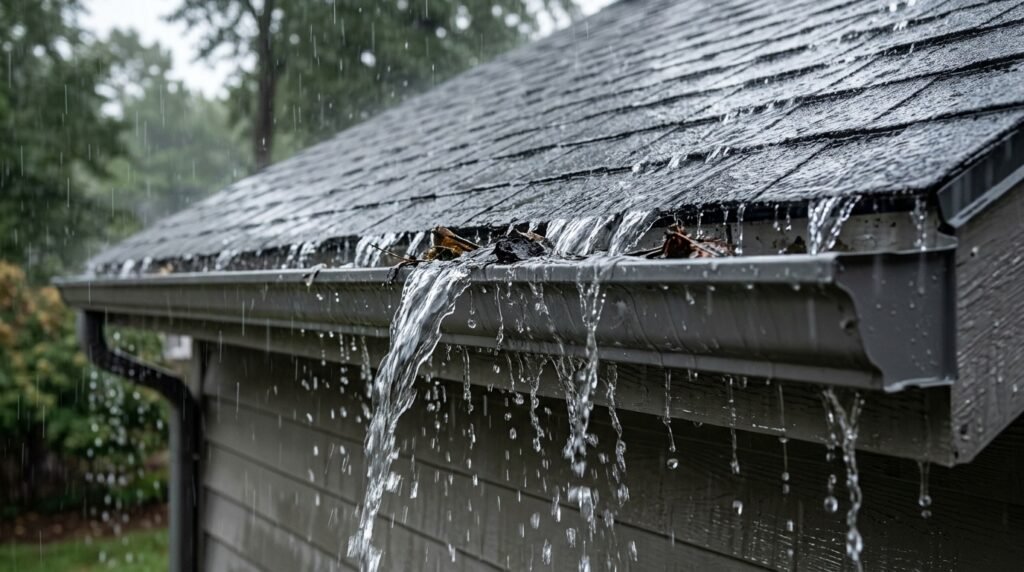
4. Blocked or overflowing gutters
When gutters clog with leaves and debris, water can’t drain. It backs up and spills over the edge or soaks back under the first row of roofing. This often shows up as a stain near an exterior wall, and it’s one of the cheapest causes to fix.
5. Valleys
All the water from two roof slopes runs down the same channel. A crack, rust hole or clog there sends a lot of water into a small area very quickly.
6. Loose or exposed fasteners
Nails that have backed out or rusted can make tiny paths for water. Not dramatic, but common on older roofs.
7. Wind-driven rain
When the rain is nearly horizontal, it gets into places that are normally protected, like under lifted edges, around ridge caps and behind loose flashing. If your leak appears only in stormy, windy conditions, this is a strong suspect.
8. Ponding and cracks on flat or concrete roofs
If your home has a flat or concrete roof, heavy rain can pool on the surface if drains are blocked or the slope isn’t right. Standing water finds hairline cracks, failed waterproofing layers and weak joints. In that case, the cause is usually the waterproofing or the drainage, not shingles or tiles.
9. Skylights
Skylights have a lot of joints and depend heavily on correct flashing all around. A small failure can leak badly in a storm.
10. An aging roof
Sometimes there isn’t one defect. The whole roof is worn: dried-out materials, loose fixings, small cracks everywhere. In that case, patching one leak just reveals the next. If you’re weighing up a bigger job, our blog has more on roof repair vs replacement.
Image 2: Blocked gutter overflowing during heavy rain. File name: blocked-gutter-overflowing-heavy-rain.webp. Alt text: Blocked gutter overflowing during heavy rain and sending water toward the roof edge.
When it isn’t the roof
Before you assume the roof is to blame, it’s worth knowing that some “rain leaks” have other causes.
- Condensation. Poor ventilation lets warm, damp air condense on the underside of the roof and drip down. It can look like a leak. If the stain appears even without heavy rain, or the attic feels humid, ventilation may be the issue.
- Plumbing. A leaking pipe in the ceiling or an upstairs bathroom can drip at any time, not just in rain. If the leak doesn’t follow the weather, check plumbing.
- Air conditioning. Blocked condensate drain lines and leaking units can stain ceilings, especially in hot weather.
- Walls and windows. Cracked exterior walls, failed window seals, damaged parapet walls and poor external waterproofing can all let rain in, and the water often shows up on the ceiling below.
- Balconies and terraces. Water can seep through a failed waterproofing layer and appear on the ceiling beneath.
A simple test: does the leak start only when it rains, and stop soon after? That points to the roof or walls. Does it drip on dry days too? That points to plumbing, AC or condensation.
Symptoms and likely causes at a glance
| What you notice | Likely cause |
|---|---|
| Stain near a chimney or exterior wall | Flashing or wall junction |
| Leak only in strong wind and rain | Wind-driven rain, lifted flashing or edges |
| Drip around a vent or pipe | Cracked pipe boot or collar |
| Stain near the outer edge of the room | Gutter overflow or roof edge problem |
| Leak after a long soaking rain, not a short one | Slow saturation through a small gap |
| Stain under a flat roof, appears after rain | Ponding, blocked drain or cracked waterproofing |
| Leak around a skylight | Skylight flashing or seal |
| Damp or dripping even on dry days | Condensation, plumbing or AC |
| Several stains in different places | Aging roof or multiple small defects |
It’s a starting point, not a diagnosis. Water travels, so the real entry point may be somewhere else.
How to narrow it down safely
You don’t need to climb up. These steps give an inspector useful clues, and may even point to a simple cause.
From the ground, once it’s dry:
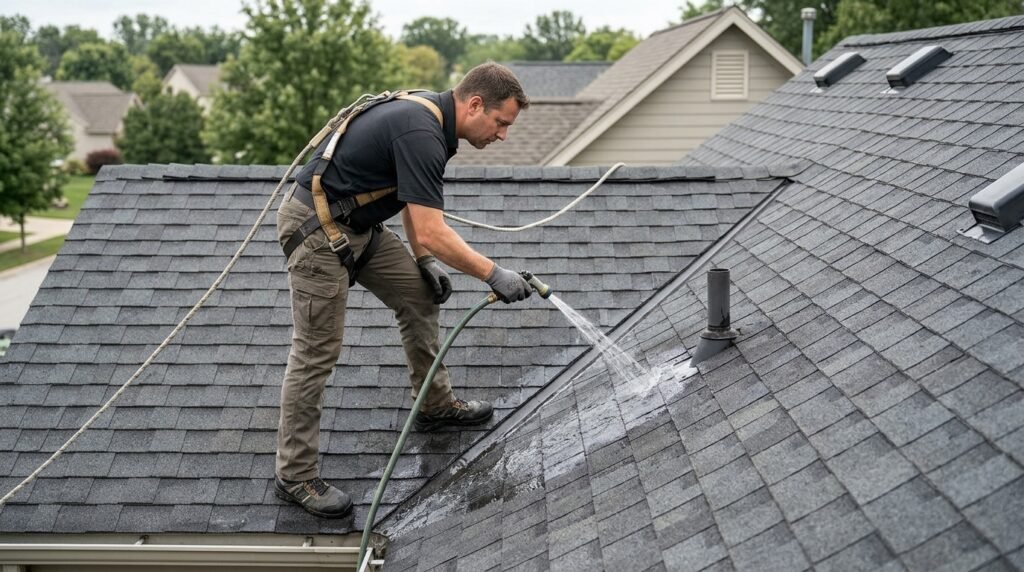
- Look at the roof with binoculars for missing, cracked or lifted shingles or tiles.
- Check around chimneys, walls and vents for bent or lifted metal and cracked sealant.
- Look at the gutters for overflow marks, sagging, debris or plant growth.
- Check the outside wall above the stain for dampness or streaks.
From inside:
- Mark the edge of the stain lightly in pencil with the date, to see if it grows.
- If you have safe attic access, check the underside of the roof near the stain with a torch for wet timber, dark trails, damp insulation or daylight.
- Note whether the leak starts early in the rain or only after a long period.
Keep a record. Photos after each rain show the pattern, and they help any roofer you call.
Please don’t walk on a wet, steep or fragile roof. If you can’t see enough from safe positions, that’s what an inspection is for.
Image 3: Homeowner checking the attic with a torch after a ceiling leak. File name: checking-attic-for-roof-leak.webp. Alt text: Homeowner checking the underside of the roof in the attic with a torch after a ceiling leak.
When it’s an emergency
Most leaks are urgent but not dangerous. Some are different. Get help straight away if:
- the ceiling is sagging, bulging with water or cracking
- water is dripping near wiring, light fittings or electrical equipment
- you hear or see signs of structural movement
- water is coming in heavily and you can’t control it
- the roof itself is visibly damaged or sagging
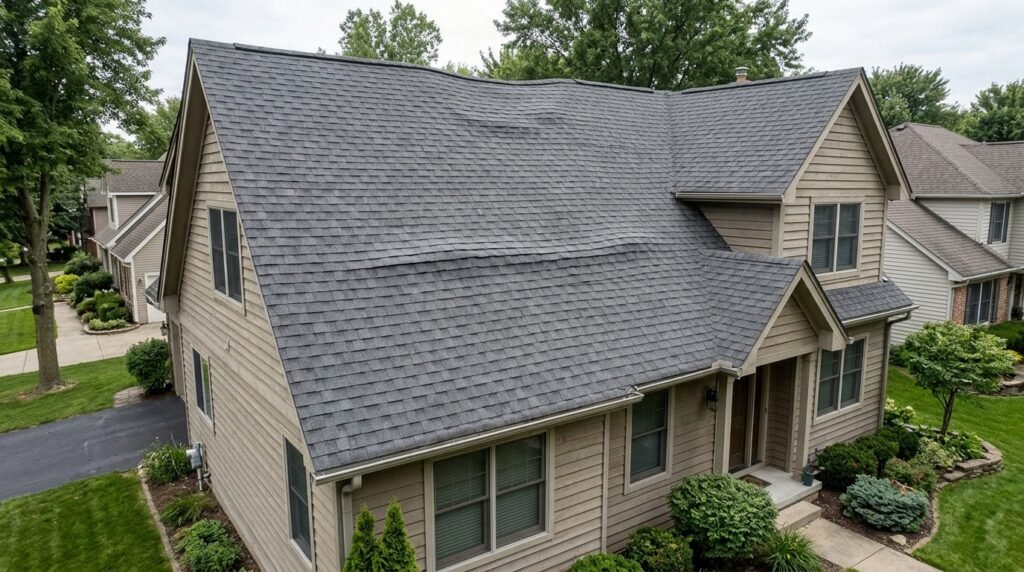
If power or ceiling safety is a concern, keep people out of the room and contact an electrician and a roofer. If you’ve noticed the roof surface itself swelling or dipping, read our guide on why roof shingles bow or bulge, because that can point to a deeper problem.
What the repair usually involves
It depends entirely on the cause, which is why finding the real source matters more than rushing to patch.
- Gutter cleaning or repair: simple and inexpensive, if drainage is the cause.
- Replacing a pipe boot or collar: a small job.
- Resealing or replacing flashing: from a quick reseal to a full chimney or valley redo.
- Replacing damaged shingles or tiles: from a few pieces to a whole section.
- Flat roof repairs: clearing drains, fixing cracks, re-applying waterproofing, or correcting ponding.
- Ventilation improvements: if condensation is the issue.
- Repairing secondary damage: wet insulation, rotten decking, and the ceiling itself.
Costs vary with the cause, the size of the repair, roof access and hidden damage, so the only reliable figure is a written quote after an inspection. A quick repair done without finding the cause often fails the next time it rains hard. That’s why the diagnosis comes first.
How to stop it happening again
You can’t control the weather, but you can prepare the roof for it.
- Book an inspection before the rainy season, and after major storms.
- Keep gutters and downpipes clear. Do it before the heavy rains, not during them.
- Trim overhanging branches.
- Fix small problems early. A cracked boot or a few lifted tiles is cheap now and expensive after a storm.
- Keep valleys and roof edges clear of debris.
- For flat roofs, keep drains open and check the waterproofing regularly.
- Check ventilation, especially if you’ve had damp or condensation.
Industry bodies such as the National Roofing Contractors Association (NRCA) and the Asphalt Roofing Manufacturers Association (ARMA) publish maintenance guidance, and InterNACHI explains common moisture and leak problems in plain language.
You can find more maintenance guides on the AurexCity blog, and you can learn about our team on the About Us page.
FAQ
Why is my ceiling leaking after heavy rain but not light rain?
Heavy rain delivers more water, with more force, and often with wind. That overwhelms small gaps, lifted flashing and overflowing gutters that cope fine with a light shower.
Why does my roof only leak when it rains hard?
Because the defect is small. A hairline crack, a lifted edge or a worn boot only lets water through when there’s enough volume or pressure. The weakness is still there in light rain, but it doesn’t show.
Can a ceiling leak appear a day after the rain?
Yes. Water soaks into timber and insulation first, then travels to a low point. It can take hours, or even a day, to show up on the ceiling.
Is a ceiling leak always from the roof?
No. Plumbing, air conditioning, condensation, leaking walls, windows and balconies can all stain ceilings. If it leaks on dry days too, check those first.
Should I pop a bulging ceiling?
A bulging ceiling is holding a lot of water and can collapse. If you can do it safely, away from wiring and light fittings, with a bucket underneath, a small hole at the lowest point lets water drain in a controlled way. If you’re unsure or it’s near electrics, call a professional.
Can I fix the leak myself?
A small, easily reached problem on a safe roof, like clearing a gutter, is sometimes doable. But if you can’t be sure where the water is entering, a proper roof leak inspection saves money and repeat leaks.
How long should I wait before calling someone?
Don’t wait. If water is coming in, call. If it was a small, one-off drip, book an inspection soon, before the next heavy rain.
Will my ceiling need replacing?
Not always. If it was a light stain and it dried quickly, it may only need drying and repainting. A sagging, soaked or mouldy ceiling usually needs repair or replacement. Fix the roof first, or the problem will return.
Final thoughts
A ceiling leak after heavy rain is stressful, but it’s also useful information. It tells you your roof has a weak spot, and the storm has shown you where to look. Whether it’s flashing, shingles or tiles, a pipe boot, a blocked gutter, a flat roof drain or something that isn’t the roof at all, the right fix depends on finding the real cause.
Protect your home first, take photos, and don’t rush to patch the wrong spot. Then get it properly checked before the next downpour.
If your ceiling is leaking, or you’d like to find the weak spots before the next heavy rain, book a roof inspection with AurexCity. We’ll find the source, show you what we find and explain your options plainly. Contact us here.