Table of Contents
- The quick answer
- Bowing, bulging, buckling and sagging: what’s the difference?
- How serious is it?
- The most common causes
- What you see and what it usually means
- What you can check safely
- What to do next
- How bowed or bulging shingles are repaired
- When it’s urgent
- How to prevent it
- FAQ
- Final thoughts
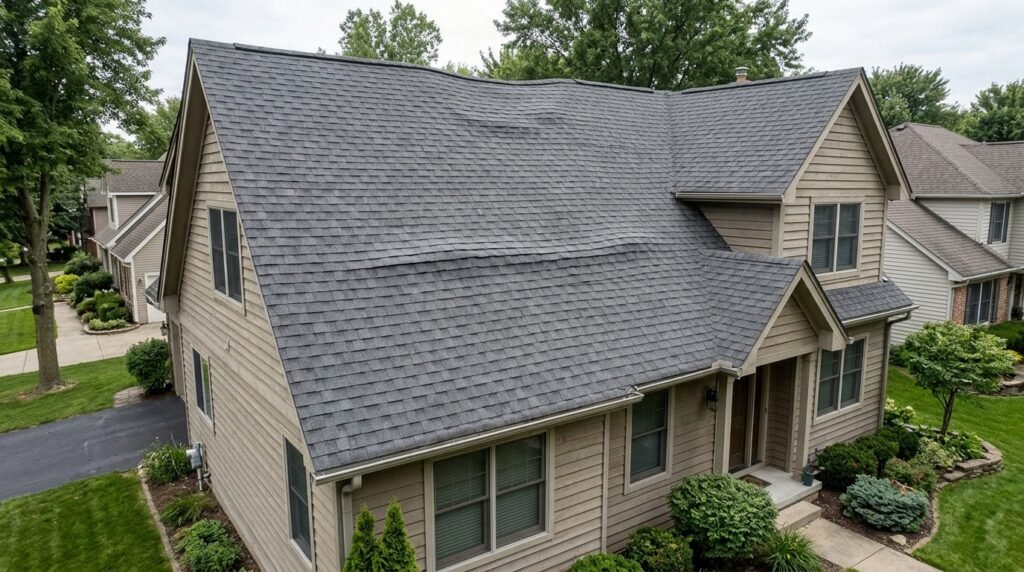
Why are my roof shingles bowing or bulging? Most of the time, something under the shingles is pushing them up. The usual causes are trapped moisture, swollen or rotted roof decking, raised nails, hidden leaks, poor ventilation, extra weight on the roof, or, in more serious cases, sagging or damaged roof framing. A few bulges can also come from blisters in the shingles themselves, or from debris or animals under them.
The key point is that bowing and bulging are often symptoms, not the problem itself. The shingles are showing you that something below isn’t right. Sometimes that’s minor, and sometimes it isn’t, which is why it’s worth getting a proper look.
If you’ve mostly got small ripples on a recently installed roof, our article on why new roof shingles buckle may fit better. And for the general guide to shingle shape problems, see our article on curling, cracking and buckling shingles.
Bowing, bulging, buckling and sagging: what’s the difference?
People use these words loosely, and roofers do too. Here’s a practical way to tell them apart:
| Term | What it looks like | What it often points to |
|---|---|---|
| Bulging | A localized raised bump or swelling in the roof surface | Trapped moisture, raised nails, swollen deck, something underneath |
| Bowing | A section of roof that curves outward or sits unevenly across a wider area | Deck movement, moisture, uneven framing |
| Buckling | Ridges or waves across the shingle surface | Wet decking, wrinkled underlayment, installation issues |
| Blistering | Small bubbles or pops on individual shingles | Trapped moisture or gas in the shingle, heat |
| Sagging | A dip or droop in the roofline, ridge or a whole slope | Structural movement, rotted or overloaded framing |
The further down the list you go, the more likely it is that the problem is below the shingles and not in them. A few blisters are one thing. A sagging ridge is a very different conversation.
How serious is it?
It helps to think in three levels.
Level 1: Surface problems. A small number of blisters, raised nail heads or a minor bump from debris under a shingle. These are usually cheap to fix, though they still shouldn’t be ignored, since they can crack, leak or lose granules.
Level 2: Deck and moisture problems. Swollen or damp decking, hidden leaks, condensation or delaminating panels. These need proper repair, because the shingles on top are only as good as the surface under them. Left alone, they tend to spread and rot the timber.
Level 3: Structural problems. Sagging, a dipping ridge, bowing across a whole slope or signs that the framing has moved or rotted. These need prompt professional attention, and sometimes an engineer’s opinion. This is the level where safety matters most.
You can’t tell which level you’re on from the ground alone. That’s the main reason an inspection is worth it, and it’s one of the situations we list in our article on when to get a roof inspection.
The most common causes
1. Trapped moisture in the shingles or the layers beneath
Moisture trapped between layers, whether in the shingle, the underlayment or the deck, can make a surface rise. Heat then expands it further. If the source is a slow leak or condensation, the bulge tends to grow over time.
2. Blisters in the shingles
Blistering shows as small bubbles or raised spots on the surface, often with missing granules where they’ve popped. It can come from moisture or gas trapped during manufacture, or from heat and poor ventilation. Individual blisters are often cosmetic early on, but they can wear out faster than surrounding shingles.
3. Raised or backed-out nails
A nail that’s lifted, or wasn’t driven properly, pushes up against the shingle above it and creates a small bump. Nail pops are very common. They’re easy to fix, but if they’ve been pushing through the shingles for a while, they can cause leaks.
4. Swollen or rotted roof decking
This is a big one. Plywood and OSB decking can swell if it gets damp, and soften or rot if it stays damp. The shingles above rise with the deck, creating a bulge or a soft, spongy section. If you press or walk on it and it feels soft, that’s a serious sign. Our article on roof rot explains how it develops.
5. Delaminating deck panels
Layered plywood can separate over time, especially after repeated wetting. The surface layer lifts and the shingles lift with it.
6. Hidden leaks
Water getting through damaged flashing, cracked pipe boots or lifted shingles can soak the deck below. Often there’s a bulge before there’s a stain on the ceiling. If you have both, take it very seriously. Our guide on how professionals find hidden roof leaks explains the tracing process.
7. Poor attic ventilation and condensation
A hot, damp attic can drive moisture into the deck from below. That can cause swelling, mould, premature shingle wear and, over time, bowing. If the attic feels stuffy, humid or smells musty, ventilation should be checked. See our guide on roof ventilation.
8. Extra layers or extra weight
Several layers of roofing, or heavy additions like equipment, water tanks or poorly supported solar mounts, put extra load on the deck and framing. If the structure wasn’t built or checked for it, the roof can bow or dip over time. Anything heavy on or near the roof should be properly assessed.
9. Structural movement or damaged framing
Rafters, trusses or supports that have cracked, rotted, been damaged by pests or moved can cause the whole roof plane to bow, dip or look uneven. This usually shows as a visible dip along the ridge or across a slope, often with signs inside the house. It’s the most serious cause on this list.
10. Debris, nests or pests
Sometimes there’s something physically under the shingles: debris, a nest or an animal. It creates a lump that looks like a bulge. Pests can also damage insulation and wood, and shouldn’t be left alone.
11. Age
An old roof wears unevenly. Granules go, adhesive dries, fixings loosen and the surface starts to look wavy. If your roof is near the end of its life, several of these causes may be happening at once. Our guide on how long a roof lasts can help you judge where yours is.
What you see and what it usually means
| What you notice | Likely cause |
|---|---|
| Small bumps at nail locations | Raised or backed-out nails |
| Small bubbles with missing granules | Blistering |
| A localized bulge that feels soft | Swollen or rotted decking |
| Bulge plus a ceiling stain below | Hidden leak soaking the deck |
| Bulging across a large area with a stuffy attic | Moisture and poor ventilation |
| Bowing along the line of a rafter | Framing or deck movement |
| A dip along the ridge or across a slope | Possible structural problem |
| A bump that moves or feels hollow | Debris, nest or animal underneath |
| Wavy roof on a very old roof | General age and wear |
It’s a guide, not a diagnosis. Several things can be happening at once, and some can only be confirmed from the attic or the underside.
What you can check safely
Please don’t walk on a roof that’s bulging, bowing or soft. It can give way, and it’s also easy to damage it further. Everything below can be done from the ground or inside.
From the ground:
- Look at the roof from different angles in low morning or evening light, which shows bumps and dips best.
- Look along the ridge line. Is it straight, or does it dip?
- Check whether the problem is in one spot or across a whole slope.
- Compare it with neighbouring roofs of similar age and shape.
- Check the gutters for a lot of granules.
From inside the house:
- Look for ceiling stains, cracks or sagging. See our guide on ceiling water stains.
- Notice whether doors or windows have started sticking, which can sometimes point to movement.
- In the attic, look at the underside of the deck for dark stains, damp wood, sagging boards, mould, daylight or damaged framing.
- Notice any musty smell or stuffy, damp air.
Keep a record. Dated photos from the same position, taken every few weeks, show whether it’s growing. That’s very helpful for an inspector.
What to do next
1. Don’t walk on it, press on it or hammer it down. You can crack shingles, break seals or damage a weak deck.
2. Take photos and notes. When did you first notice it? Has it grown? Has there been a storm, a leak or recent work?
3. Check the attic if it’s safe to do so. Look for the signs listed above.
4. Protect the inside. If you see a leak or a ceiling stain, put out a bucket, move belongings and take photos. Our guide on what to do when a ceiling leaks after heavy rain has the details.
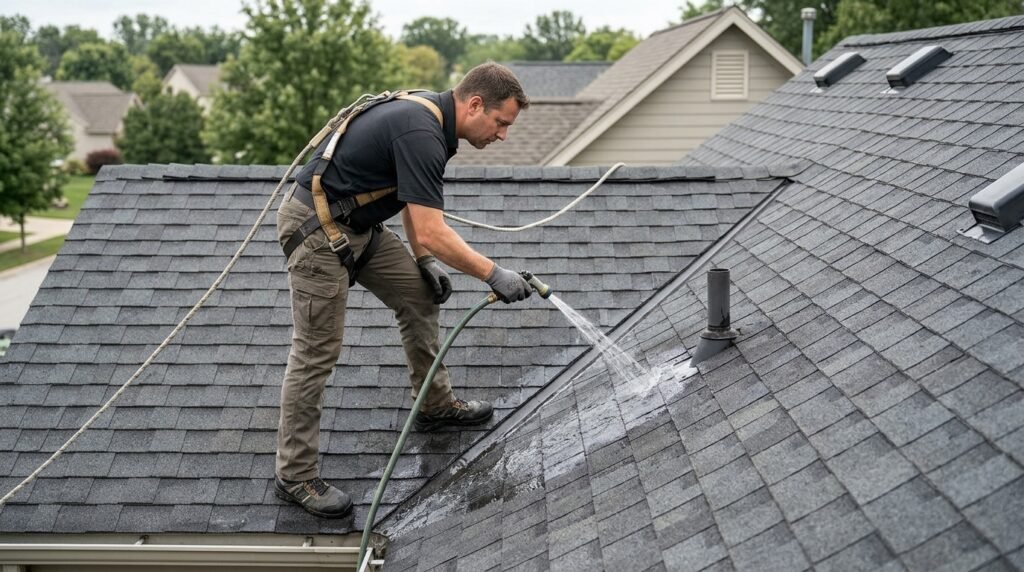
5. Book a proper inspection. A roofer should check the surface, the deck, the attic and the framing. Our article on how professionals find hidden roof leaks shows what a thorough inspection involves.
6. Get a second opinion if needed. If the answer involves structural work or a full replacement, it’s reasonable to get another view.
7. Don’t just cover it up. Layering new shingles over a bulge doesn’t fix the cause, it hides it, and it adds weight.
How bowed or bulging shingles are repaired
The repair depends entirely on the cause.
- Raised nails: corrected or replaced, with damaged shingles swapped out.
- Blistered shingles: if isolated, replaced. If widespread, it may be a sign the roof is wearing out.
- Debris, nests or pests: removed, with any damage repaired and the entry point sealed. For pests, get appropriate professional help.
- Swollen or damp decking: the source of moisture is fixed, then affected panels are dried or replaced before new shingles go on.
- Rotted decking: removed and replaced, usually along with the shingles above it.
- Hidden leaks: the leak source (often flashing, boots or damaged shingles) is repaired. See our article on damaged flashing and leaks.
- Ventilation problems: improved airflow, such as added vents or clearing blocked ones.
- Extra layers or weight: a tear-off back to the deck, with the structure checked.
- Structural problems: assessed by a qualified person, and repaired or reinforced as needed before the roof covering is touched.
If damage is widespread, or the roof is near the end of its life, it may make more sense to replace than to repair. Our guide on repair vs replacement walks through that decision, and our breakdown of roof repair costs explains what affects the price.
When it’s urgent
Get help promptly, and keep people out of the area if necessary, if you notice:
- a visible sag or dip along the ridge or across a slope
- bowing across a large section of the roof
- a soft, spongy feeling or a section that gives way
- ceiling sagging, cracking or bulging inside the house
- doors and windows suddenly sticking or cracks opening in walls
- active leaks or water running through the ceiling
- creaking, cracking or movement noises from the roof
- bulging along with a recent storm or heavy loading
These can point to structural problems, and they shouldn’t wait. If it seems dangerous, treat it as an emergency, keep clear of the area and contact a professional straight away. Our guide on signs of emergency roof damage can help you decide how urgent it is.
How to prevent it
You can’t prevent every cause, but you can reduce the risk.
- Inspect regularly, and after storms. Our guide on how often to inspect your roof gives a sensible routine.
- Fix leaks early. Water is the root of most deck and framing problems.
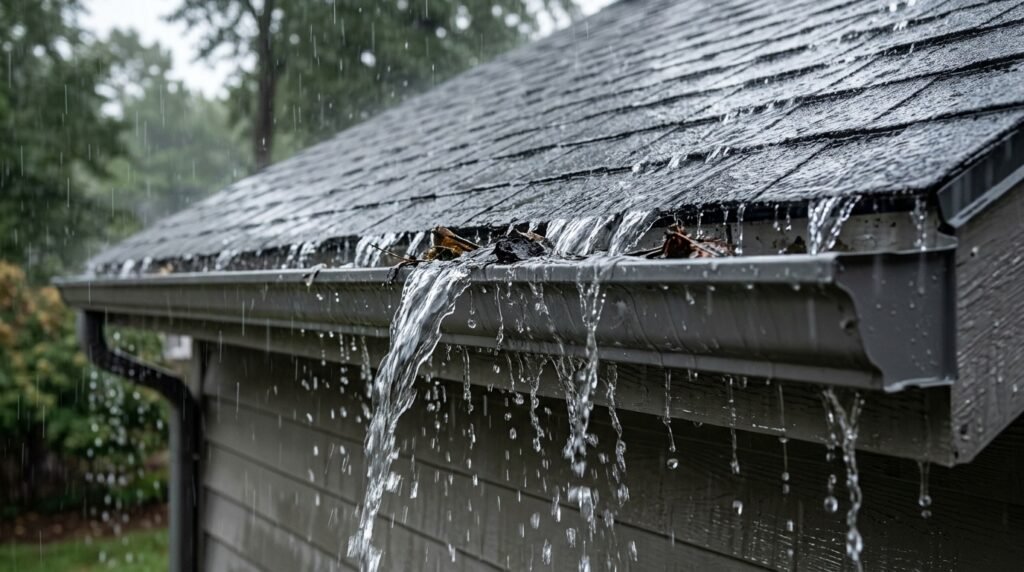
- Keep gutters and valleys clear so water doesn’t back up.
- Check attic ventilation and moisture levels.
- Don’t add extra layers without checking whether the deck and structure can support them.
- Get any heavy equipment or solar installation properly assessed.
- Use a good installer who checks and dries the deck before roofing, and who fixes the cause of earlier problems.
- Don’t ignore small bumps. They’re often the first visible sign.
Industry bodies such as the National Roofing Contractors Association (NRCA) and the Asphalt Roofing Manufacturers Association (ARMA) publish guidance on asphalt shingle roofs, ventilation and common problems, and InterNACHI explains moisture and structural warning signs in plain language.
Frequently Asked Questions
Why are my roof shingles bulging?
Usually because something underneath is pushing them up: raised nails, trapped moisture, swollen or rotted decking, a hidden leak, or debris. Occasionally it’s blistering in the shingles themselves.
Why are my roof shingles bowing?
Bowing across a wider area often points to the deck or framing: moisture swelling, uneven or damaged panels, extra weight or structural movement. It’s worth having it assessed promptly.
Is bulging on a roof serious?
It can be. A small bump from a raised nail is minor. A bulge that feels soft, or comes with a ceiling stain or a dipping roofline, can point to deck rot or structural trouble.
How is bowing different from buckling?
Buckling is ripples or waves across the shingles, often from installation or deck movement. Bowing is a broader curve or unevenness in the roof plane, which more often points to deck or framing issues.
Can bulging shingles be pressed back down?
Please don’t. Pressing or hammering can crack shingles, break seals and damage the deck. If the cause is below, flattening the surface won’t fix it.
Will my roof collapse?
Most bulges don’t mean collapse, but a visible sag, soft spots or movement signs should be treated seriously and checked promptly by a professional.
Can I fix it myself?
A raised nail on a safe, low roof might be manageable for someone experienced. But you can’t tell from the surface whether the cause is minor or structural, so an inspection first is much safer.
Does bulging mean I need a new roof?
Not necessarily. If the cause is isolated, a repair may be enough. If the deck is widely damaged or the roof is near the end of its life, replacement may make more sense. An inspection will tell you.
Is it covered by my warranty or insurance?
It depends on the cause, your policy and your paperwork. Installation faults may fall under a workmanship warranty, and storm damage may be covered by insurance, while gradual wear usually isn’t. Check your documents and report problems promptly in writing.
Final thoughts
A bowing or bulging roof is the roof telling you something. It might be a minor thing, like a raised nail or a blister. It might be a damp deck that’s quietly rotting. Or it might be a structural warning sign that needs prompt attention.
You can’t tell which from the ground, so don’t guess, don’t hammer it down and don’t cover it up. Take photos, keep off the roof and get it properly checked.
If your shingles are bowing, bulging or looking uneven, book a roof inspection with AurexCity. We’ll check the shingles, the deck and the attic, show you what we find and explain your options plainly. Contact us here.