Before winter, clean your gutters and drains, check the flashing and sealant, look for cracked or loose tiles and shingles, check the attic for damp, trim branches and fix small problems. That’s the short list, and most of it takes a few hours and a pair of binoculars, not a big budget. Doing it now, while the weather is still dry and the days are still long enough, costs far less than fixing a leak in the middle of a cold, wet January.
Winter doesn’t treat a roof kindly. Cold nights, winter rain, damp air, strong winds before a storm and weeks with very little sun all test the weak spots you didn’t know you had. Below, we’ll walk you through a simple pre-winter routine, in the order we’d do it. If you’ve already got a stain on the ceiling, our guide on why a ceiling leaks after heavy rain will help you with the first steps.
Want someone to check your roof before the cold sets in? Contact AurexCity to book an inspection, meet the team on our About Us page, or browse more roofing guides. If you’d like to know what a proper inspection involves, read how professionals find hidden roof leaks.
Table of Contents
- Why winter is hard on roofs
- Start with a check from the ground
- Clean the gutters and drains
- Check the flashing and sealant
- Look at the tiles or shingles
- Pipe collars, vents and skylights
- Look in the attic
- Trim branches and clear the roof
- Flat and concrete roofs
- If you live in a snowy area
- Things fixed to the roof
- A simple pre-winter checklist
- What not to do
- When to call a professional
- FAQ
- Final thoughts
Why winter is hard on roofs
It helps to know what you’re protecting the roof from.
- Cold nights. Roof materials shrink when it’s cold. Cracks that were hairline in summer open up a little, and sealant that was already dry gives way.
- Winter rain. It tends to be steadier and longer than a monsoon downpour. A roof that held up against a short storm can start to leak when it’s wet for days.
- Damp and fog. With little sun, a wet roof stays wet. That encourages moss and algae, and it keeps moisture sitting against wood and metal.
- Wind ahead of a storm. Strong gusts lift loose edges, flashing and tiles that were barely hanging on.
- Hail and frost. Not every year, but when they come, they find cracked and weak materials very quickly.
- Less time to fix things. Short days and wet weather mean repairs get harder, slower and often more expensive.
The good news is that nearly everything on the list below is simple, and doing it before the weather turns makes a big difference.
Start with a check from the ground
You don’t need to climb up to begin. A walk around the house with a pair of binoculars, in good light, tells you a lot.
Look for:
- tiles or shingles that are cracked, slipped, curling or missing
- bent, lifted or rusty metal around chimneys, walls and vents
- sagging gutters, or gutters pulling away from the wall
- stains or streaks on the outside walls below the roof edge
- dips or bulges in the roofline
- moss or algae patches
- anything that looks different from how it did last year
Take photos as you go. If you do need a roofer later, dated photos help them, and they show whether something is getting worse.
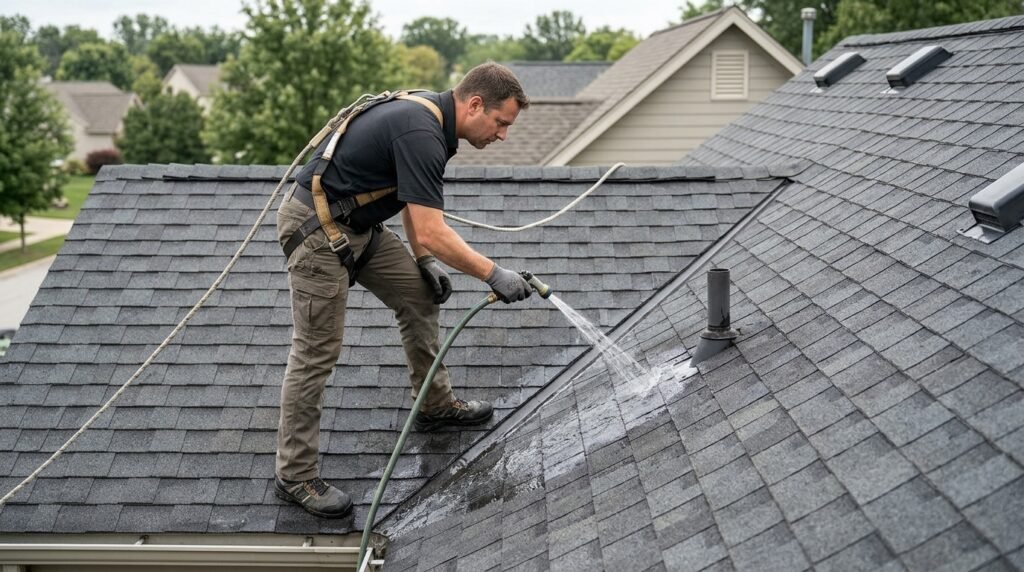
Please don’t go onto the roof if it’s steep, high, wet or fragile. If you can’t see enough from the ground, that’s what an inspection is for.
Clean the gutters and drains
If you only do one job, make it this one. Blocked gutters are one of the most common causes of winter leaks, and one of the cheapest to fix.
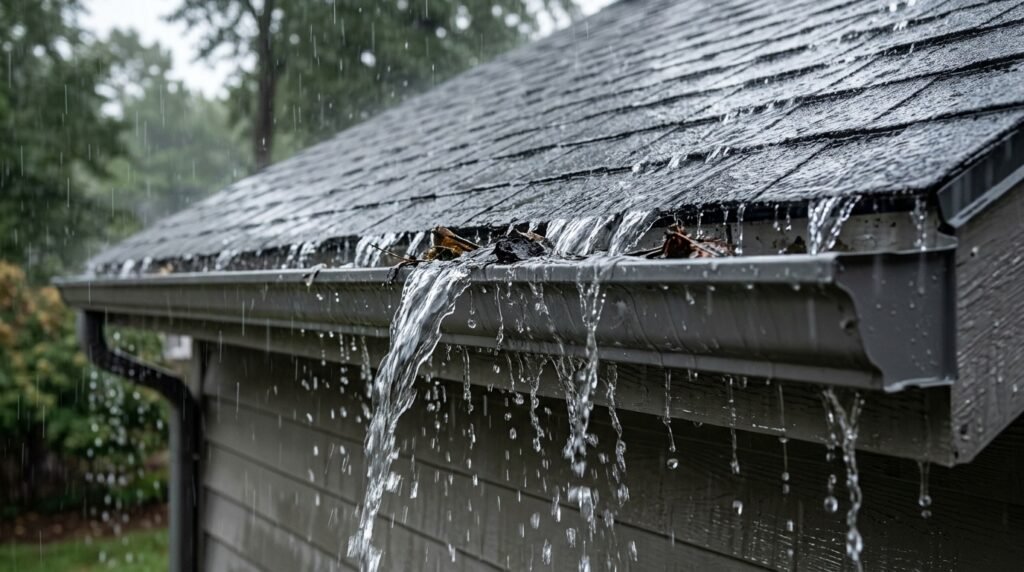
When gutters and downpipes are clogged with leaves, dust and debris, water can’t escape. It backs up, spills over the edge and soaks back under the roof edge, where it rots the wood and finds its way into the house.
- Clear out leaves, dirt and debris from the gutters, and flush them with water to check they drain.
- Check the downpipes. Make sure water flows freely and comes out away from the walls.
- Look for sagging or loose gutters, cracks and joints that leak, and fix them.
- Check where the water goes. It should run away from the foundations, not pool against the house.
If you want a full routine for the year, our roofing guides cover gutter and seasonal maintenance in more detail.
Check the flashing and sealant
Flashing is the metal that seals the joints around chimneys, walls, vents and valleys. It’s one of the most common places for a roof to leak, and cold weather makes small weaknesses worse.
From the ground, or from a safe position, look for:
- bent, lifted or loose metal
- gaps between the flashing and the chimney, wall or roof
- rust patches or orange-brown streaks
- sealant that’s dry, cracked, shrunken or missing
- crumbling mortar around chimney flashing
A small sealant job or a loose edge is cheap to fix before winter. If the flashing is badly rusted, bent or has pulled away, get it looked at properly. A cover-up of roof cement over a bad detail doesn’t last, and it hides the real problem.
Look at the tiles or shingles
The roof surface is your first line of defence, so any weak spot in it is a weak spot in winter.
- Replace cracked, broken or missing tiles and shingles. Even one gap lets in water.
- Re-seat slipped tiles. A tile that’s moved a few centimetres can leave an opening.
- Look at shingle condition. Curling, buckling or lots of granules in the gutters mean the surface is wearing out. Our guide on why roof shingles bow or bulge explains what swelling can mean underneath.
- Check the ridge and edges. The cap tiles and the roof edge are the first places wind gets under.
- Deal with moss and algae gently. If there’s a lot, it can hold moisture against the roof. Don’t use a pressure washer, which can damage tiles and shingles. If it’s heavy, ask a professional.
Pipe collars, vents and skylights
These small details leak a lot more often than the big roof surface.
- Pipe collars. The rubber or plastic around vent pipes cracks in the sun. If it’s hard, split or cracked, replace it. It’s a small, cheap job.
- Vents. Make sure they’re fixed securely and not blocked by debris or nests.
- Skylights. Check the seals and flashing all the way around, and the glass or frame for cracks.
If any of these look tired, deal with them now. They’re exactly the parts that fail first when the rain stays for days.
Look in the attic
What you see inside often tells you more than what you see outside. On a dry day, go up with a torch.
- Look for stains and dark trails on the underside of the roof and on the wood.
- Check for damp or flattened insulation. Wet insulation stops working.
- Look for daylight coming through gaps.
- Smell the air. A musty smell often means moisture is getting in somewhere.
- Check for condensation, which can happen in cold weather when warm, damp air meets a cold roof.
- Make sure the ventilation is clear. Vents shouldn’t be blocked by insulation, boxes or debris.
- Check for nests or pests, which like the warmth of an attic and can damage insulation and wires.
If you find a stain, don’t assume it’s old. Mark the edge with a pencil and the date, and check it again after the next rain. If it grows, it’s still active. Our article on ceiling water stains explains how to read them.
Trim branches and clear the roof
- Cut back branches that hang over or touch the roof. In wind, they scrape tiles and drop debris. In rain, they drip onto the roof for hours and drop leaves into the gutters.
- Clear leaves and debris from the roof, valleys and around chimneys and vents, where they hold water against the metal and the roofing.
- Check for loose items. Anything that could blow off or be flung onto the roof in a storm should be secured or removed.
Be careful with big branches. If tree work is anywhere near the roof, power lines or the house, leave it to someone with the right equipment.
Flat and concrete roofs
A lot of homes have flat concrete roofs, and they need their own winter check.
- Clear the drains and outlets so water runs off instead of pooling. Standing water is a leak waiting to happen.
- Look for cracks, especially hairline cracks along edges, joints and where the roof meets walls and parapets.
- Check the waterproofing layer for peeling, bubbling, splits or worn patches.
- Check around pipes, vents and water tank bases, where water likes to get in.
- Look for pooling. After rain, note where the water sits. Low spots need attention.
If the waterproofing is old or failing, winter is not the best time to find out. If you can, deal with it before the rain starts, because most waterproofing needs dry weather to be applied properly.
If you live in a snowy area
If you’re in or near the hills and northern areas where it snows, a few extra things matter.
- Snow is heavy. A roof that’s already weak, sagging or damaged is more at risk. If you see dips, bulges or movement, get it checked before the snow arrives.
- Keep gutters and drains clear, so meltwater can run off, instead of backing up under the roof edge.
- Make sure the roof slope and drainage work, so snow and meltwater don’t pool.
- Keep an eye on the attic. Heat escaping into a cold attic can melt snow unevenly and cause water to refreeze at the roof edge. Good insulation and ventilation help.
- Don’t climb onto an icy or snowy roof. If snow needs removing, use the right tools from the ground, or hire someone who does it safely.
Things fixed to the roof
Satellite dishes, water tanks, solar panels, antennas and cables are all fixed to the roof somehow, and every fixing is a possible leak.
- Check the fixings are tight and that nothing has loosened in the wind.
- Look at where cables and pipes enter the roof, and make sure the seals are intact.
- Check water tank bases for cracks and pooling.
- Check solar mounts for loose brackets and gaps in the sealing around them.
If you’re not sure how something was fitted, ask the person who installed it, or have it checked. A wind-loosened bracket in January is a bad time to find out.
A simple pre-winter checklist
Here’s the whole routine in one place. Tick things off as you go.
| Job | What to do | Who can do it |
|---|---|---|
| Look at the roof from the ground | Binoculars, photos, note any changes | You |
| Clean gutters and downpipes | Clear debris, flush, check drainage | You, or a handyman |
| Check flashing and sealant | Look for bent, lifted, rusty or cracked parts | You to look, a roofer to fix |
| Check tiles or shingles | Replace cracked, slipped or missing ones | A roofer |
| Check pipe collars, vents and skylights | Replace worn collars, check seals | A roofer |
| Check the attic | Look for stains, damp, daylight, smell, blocked vents | You |
| Trim branches and clear debris | Cut back, clear valleys and roof edges | You, or a tree specialist |
| Check flat roof drains and waterproofing | Clear outlets, look for cracks and pooling | You to look, a roofer to fix |
| Check items fixed to the roof | Tighten fixings, check seals | The installer, or a roofer |
| Book a professional inspection | For an expert check and a written report | A roofer |
What not to do
- Don’t go onto a wet, icy or steep roof. It’s the easiest way to get hurt.
- Don’t walk on tiles or shingles if you can avoid it. You can crack them and cause new leaks.
- Don’t cover problems with a thick layer of sealant or roof cement. It looks like a fix and usually hides a bigger problem.
- Don’t use a pressure washer on the roof surface.
- Don’t ignore small stains. A faint ceiling mark is often the first warning.
- Don’t leave it until the first big rain. By then, it’s too late to do the job properly.
When to call a professional
Some jobs are fine to do yourself. Others need someone who works on roofs every day. Call a professional if:
- the roof is steep, high or fragile
- you’ve found damaged or rusty flashing
- there are cracked, slipped or missing tiles or shingles
- you’ve seen ceiling stains or damp in the attic
- the roof is dipping, bulging or sagging
- you’re not sure what you’re looking at
- the roof is old, and you want to know how much life it has left
A proper inspection before winter gives you a clear picture of what needs fixing now, what can wait and what to keep an eye on. If you’d like to understand how long your roof should last, our guide on how long a roof lasts can help.
If you want to read more about good practice, the National Roofing Contractors Association (NRCA) and the Asphalt Roofing Manufacturers Association (ARMA) publish guidance on roof care and maintenance, and InterNACHI explains common seasonal roof problems in plain language.
FAQ
What roof maintenance should I do before winter?
Clean the gutters and drains, check the flashing and sealant, replace cracked or loose tiles and shingles, check pipe collars and vents, look in the attic for damp, trim branches, clear debris from the roof and check flat roof drains and waterproofing. Then book a professional inspection if you’re unsure.
When is the best time to do pre-winter roof maintenance?
As early as you can, while the weather is still dry and the days are long. Many repairs, especially sealing and waterproofing, need dry conditions to work properly.
Can I inspect my roof myself?
You can do a basic check from the ground with binoculars, and look in the attic with a torch. Please don’t climb onto a wet, steep or fragile roof. For anything beyond a basic look, a professional is safer.
Why do roofs leak more in winter?
Cold makes materials shrink and crack, winter rain is often long and steady, damp air keeps the roof wet, and wind can lift loose edges. Weak spots that stayed dry in summer get tested.
How often should I get my roof inspected?
Once a year is a sensible habit, plus after major storms. Before winter and before the rainy season are both good times.
Do I need to clear snow off my roof?
Only in snowy areas, and only if it’s heavy enough to be a concern. Never climb onto a snowy or icy roof. Clear it safely from the ground with the right tools, or hire someone who does it professionally.
Is it worth fixing small roof problems before winter?
Yes. A cracked pipe collar or a few slipped tiles costs very little now, and a lot more after a few weeks of winter rain.
What if I find a leak in winter?
Protect your belongings, put a bucket under the drip, take photos and book an inspection as soon as it’s safe. Don’t patch it with sealant until you know where the water is getting in.
Final thoughts
Pre-winter roof maintenance isn’t complicated. It’s a few jobs, done in the right order, before the weather turns: clear the gutters, check the flashing and sealant, replace damaged tiles or shingles, look in the attic, trim the branches and deal with small problems while they’re still small.
The roof you look after in November is much less likely to cost you a bucket and a ruined ceiling in January. And if you’re not sure what you’re seeing, a professional inspection will tell you straight.
If you’d like your roof checked before winter, book a roof inspection with AurexCity. We’ll look at the whole roof, show you what we find and explain what needs doing, and what can wait. Contact us here.