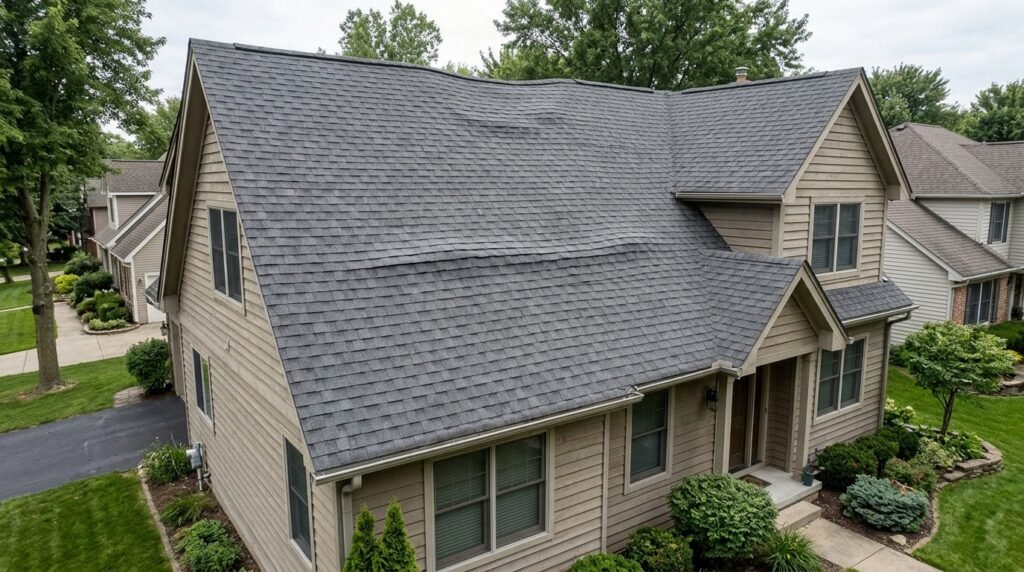
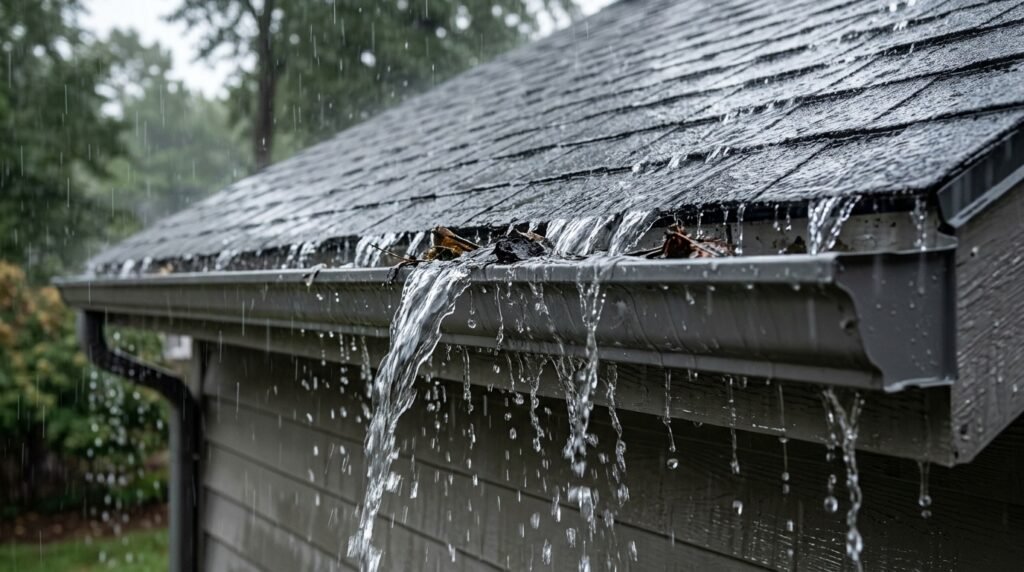
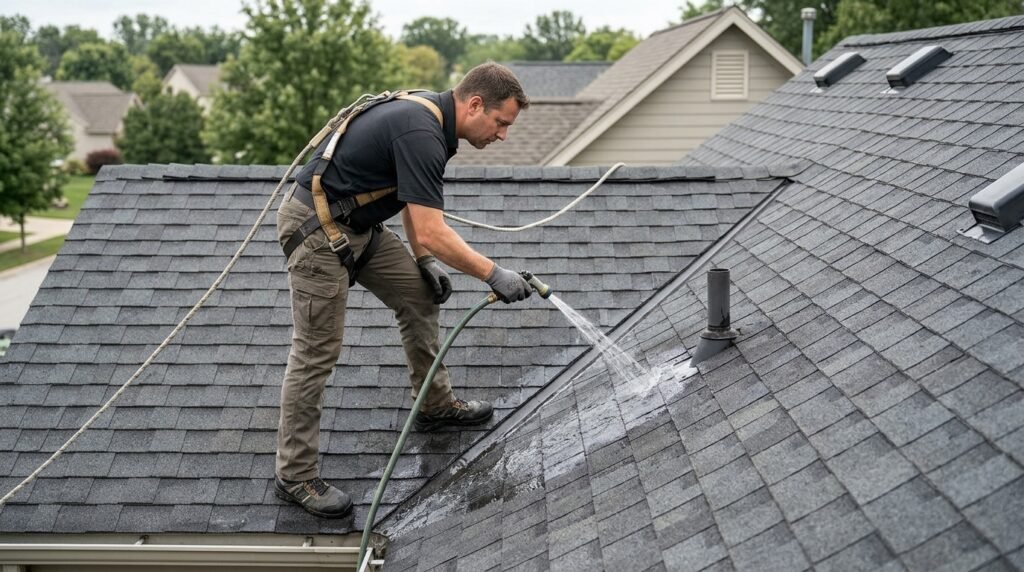
To protect your roof from wind damage, check it before storm season, fix anything that’s loose, secure the things fixed to it, trim the trees around it and use materials and fixings that are made to resist wind. Wind rarely tears a healthy roof apart. It goes after the weak spots: a lifted tile, a loose sheet, a worn edge, a bent piece of flashing. Once the wind gets a grip on one of those, it can peel away a lot more very quickly. That’s why a few hours of checking and fixing before the storms arrive is worth far more than the repairs afterwards.
Below, we’ll explain how wind actually damages a roof, where the weak spots are, how to strengthen them and what to do before, during and after a storm. If you’ve already got a stain or a drip after a windy day, our guide on why a ceiling leaks after heavy rain will help you with the first steps.
Want someone to check your roof before the next storm? Contact AurexCity to book an inspection, meet the team on our About Us page, or browse more roofing guides. If you’d like to know what a proper inspection involves, read how professionals find hidden roof leaks.
Table of Contents
- How wind damages a roof
- The weak spots on a roof
- Warning signs of wind damage
- Check your roof before storm season
- Secure tiles and shingles
- Metal roofs and sheets
- Flashing, ridges and edges
- Trees and loose objects
- Things fixed to the roof
- Flat concrete roofs and parapet walls
- Wind-resistant materials and design
- When a storm is coming
- During the storm
- After the storm
- When to call a professional
- FAQ
- Final thoughts
How wind damages a roof
It helps to know what wind actually does, because it isn’t just pushing.
It pulls the roof upward. When wind blows over a roof, it speeds up and the pressure drops, like air over an aeroplane wing. That creates suction, or uplift, that tries to lift the roof covering away. The strongest suction is at the corners, edges, ridge and overhangs.
It gets underneath. If a tile, shingle, sheet or piece of flashing is even slightly loose, wind can get under it. Air pressure builds up, and the piece can be lifted, flipped or ripped off. Once one piece goes, the pieces around it lose their protection, and damage can spread fast.
It throws things. Branches, tiles, loose sheets, garden furniture and rubbish can hit the roof, crack tiles, dent metal and bend flashing.
It drives rain sideways. Wind-driven rain can be forced under lifted edges and past flashing that would stay dry in calm weather. That’s why a windy storm often means a leak.
It tests the weakest link. A roof is only as strong as its weakest fixing. Old nails, rusty screws, dried-out sealant and worn flashing all give way first.
In a country with strong pre-monsoon storms and dust storms, these gusts can come with very little warning, so being prepared matters.
The weak spots on a roof
Wind goes for the same places every time.
| Weak spot | Why wind attacks it | What often goes wrong |
|---|---|---|
| Corners and edges | Strongest uplift forces | Lifted or torn tiles, shingles and sheets |
| Ridge and hips | Wind speeds up over the top | Loose or missing ridge caps |
| Overhangs and eaves | Wind gets underneath | Lifted edges, torn soffits, loose gutters |
| Gable ends | Wind pushes on the end wall and under the edge | Lifted roofing along the gable edge |
| Flashing | Thin metal that can be caught and bent | Bent, lifted or torn flashing around chimneys, walls and vents |
| Old or loose tiles and shingles | Weak seal or fixing | Slipped, cracked or flying pieces |
| Metal sheets | Large flat surface with fixings that can loosen | Loose screws, lifted sheet edges and laps |
| Things fixed to the roof | Catch the wind like a sail | Loose dishes, tanks, solar panels and antennas |
If you take care of these spots, you take care of most of the risk.
Warning signs of wind damage
After a windy day, or whenever you’re checking, look for:
- missing, lifted, curled, cracked or slipped tiles and shingles
- bent, lifted or loose sheets, or sheets that rattle in the wind
- loose ridge caps
- bent, lifted or missing flashing around chimneys, walls and vents
- debris, pieces of roofing or fallen branches in the garden or on the roof
- gutters that are loose, bent or pulling away
- dents or scratches on metal parts
- damaged fascia boards or soffits
- leaning or loose dishes, antennas, tanks or solar panels
- ceiling stains or drips that weren’t there before
- daylight showing through the roof from the attic
Wind damage isn’t always dramatic. A single lifted shingle or a slightly bent piece of flashing can look minor from the ground and still let water in. For a full guide to checking safely, see our article on how to check your roof for damage from the ground.
Check your roof before storm season
The best time to protect your roof is before the wind arrives. A good routine is to check twice a year: once before the pre-monsoon storm season, and again before winter, plus after any major storm.
Walk around the house on a dry day, in good light, with binoculars. Look at:
- the roof surface, for loose, cracked or missing pieces
- the ridge, hips and edges
- the flashing around chimneys, walls, vents and valleys
- the gutters and fascia
- anything fixed to the roof
- the trees around the house
- the attic, if you can get in safely, for daylight, damp and loose fittings
Take dated photos. If you ever need a roofer or an insurance claim, a record of what the roof looked like before the storm is very useful. And please don’t climb onto the roof to do it. A ground check, plus a professional inspection when needed, is much safer.
Secure tiles and shingles
Loose pieces are the most common start of wind damage.
Tiles
- Re-seat slipped tiles and replace cracked or broken ones. A single missing tile is a gap the wind can work on.
- Check the fixings. On many tile roofs, tiles are held by clips, nails or mortar. Make sure they’re intact, and that the edges, ridge and hips are fixed down more firmly than the middle.
- Check the mortar on ridge and hip tiles. If it’s crumbling, cracked or missing, the caps can lift in wind.
- Don’t walk on tiles. You can crack them, and cracked tiles are weaker in wind. Leave replacing to a roofer.
Shingles
- Replace missing, torn or badly curled shingles.
- Check the seal. Shingles are held down partly by sealant strips that bond them to the layer below. If they’ve dried out or lifted, wind can get underneath. A roofer can re-seal lifted shingles with the right adhesive.
- Check the nailing. Nails that are too high, too few, or driven too hard or not hard enough weaken the hold. This is a common installation problem.
- Look at age. Old shingles lose their grip and become brittle. If the roof is ageing, our guide on how long a roof lasts can help you judge when it’s time to plan a replacement.
If you see buckling or bulging, that can mean moisture or deck problems underneath, which also weaken wind resistance. Our guide on why roof shingles bow or bulge explains more.
Metal roofs and sheets
Metal sheets are strong, but they catch the wind like a big flat sail, and the fixings do all the work.
- Check the screws or fasteners. They should be firmly in, with intact washers. Loose, rusty or missing ones are a weak point.
- Check the overlaps and joints. Gaps and lifted edges let wind get underneath.
- Look for rust, especially around fixings and cut edges, which weakens the metal.
- Check the sheets at the edges, corners and ridge, where the uplift is strongest.
- Listen for rattling in wind. Noise often means something is loose.
- Replace damaged or corroded sheets. A bent or holed sheet doesn’t hold properly.
- Don’t walk on the sheets unless you know how. They can be slippery, and you can dent or loosen them.
With sheet roofs, a small fixing problem can turn into a whole sheet peeling away, so it’s worth having them checked each year.
Flashing, ridges and edges
These are the spots where wind gets a grip.
- Flashing. Bent, lifted or loose flashing can be caught by the wind and ripped away. Check it around chimneys, walls, vents, valleys and skylights. Our guide on damaged flashing and leaks explains what to look for.
- Ridge caps and hip tiles. They should be firmly fixed and well bedded. Replace cracked ones and re-fix loose ones.
- Roof edges and drip edge. The edge should be firmly fixed, with no lifted pieces. Check the fascia and soffits too, since wind that gets under the overhang can push upward on the roof.
- Gable ends. The edges along the end walls need to be well fixed, since wind pushes hard there. If a gable end looks loose or the roofing along it is lifting, get it checked.
- Gutters. Loose gutters can be pulled away, and they can flap and damage the roof edge. Make sure the brackets are firm.
A professional can strengthen these areas with extra fixings or better detailing, which is often a modest job compared with the repairs after a storm.
Trees and loose objects
Many wind damage claims aren’t caused by the wind itself, but by what the wind throws.
- Trim branches that overhang or touch the roof. Remove dead or weak branches, which are the first to break off. Be careful with big branches, and leave tree work near the house or power lines to someone with the right equipment.
- Check trees that lean toward the house or look unhealthy. A professional can tell you whether they’re safe.
- Secure or store loose items before a storm: garden furniture, bins, ladders, planters, tools and anything else that could fly.
- Clear loose rubbish and roof debris, which can be thrown around or block drainage.
- Check neighbouring hazards, like loose sheets or tanks on nearby roofs, and let the owner know if you see a problem.
A tree branch that lands on a roof can crack tiles, dent metal and bend flashing all at once, so a bit of trimming is cheap insurance.
Things fixed to the roof
Satellite dishes, water tanks, solar panels, antennas, air conditioning units and cables all catch the wind, and every fixing is a possible leak.
- Check that the mounts and brackets are tight, and that nothing has loosened over time.
- Check the bases. Look at where the fixings go through the roof, and make sure the seals and flashing are intact.
- Make sure items are properly anchored, not just sitting on the roof or held with a few small screws.
- Check water tank stands and bases for cracks and movement.
- Check solar panels and mounts for loose brackets, damaged rails and gaps around the sealing.
- Secure cables and wires so they don’t whip around and scratch the roof.
If you’re not sure how something was installed, ask the person who fitted it, or have a roofer check. Anything heavy or large should be installed with the wind in mind, and by someone who knows how to do it without damaging the roof.
Flat concrete roofs and parapet walls
Flat concrete roofs handle wind differently. They’re heavy and solid, so the roof slab itself is rarely lifted, but they have their own weak points.
- Parapet walls along the edge can crack, lean or be damaged by strong gusts. Check them for cracks, loose sections or movement.
- Water tanks, stands and rooftop structures can be toppled or blown around. Make sure they’re anchored securely.
- Waterproofing edges and joints can be lifted, torn or damaged by wind and debris. Look for peeling, gaps and exposed areas.
- Loose items like old tanks, sheets, wood, pipes and rubbish should be secured or removed before a storm.
- Drain outlets can get blocked by debris that the wind blows onto the roof. Clear them, because blocked outlets mean pooling water when the rain follows the wind.
- Shade structures, light sheds and sheet roofs on top of the slab can be lifted off, so check their fixings.
Wind-resistant materials and design
If you’re building, replacing or upgrading a roof, there’s a lot you can do to make it stronger from the start.
- Choose materials with a wind rating. Many shingles and tiles are rated for certain wind speeds. Ask your roofer for the ratings and what the product is tested to.
- Insist on proper fixing. The right number of nails or screws in the right places matters more than people think. Ask how many fixings per tile, shingle or sheet, and how the edges, ridge and hips will be fixed.
- Think about the roof shape. Hip roofs, which slope on all four sides, generally handle wind better than roofs with large flat gable ends. Very large, open overhangs catch more wind.
- Consider the overhang. Large overhangs get more uplift, so they need strong fixings and good soffit attachment.
- Use quality flashing and edge details, well fixed and properly overlapped.
- Make sure the roof deck is well attached to the structure. This is the foundation of wind resistance, and a good roofer or builder will check it.
- Use compatible, corrosion-resistant fixings, so they don’t rust and loosen.
- Ask about the installation. A well-fitted ordinary roof often beats a badly fitted expensive one.
A stronger roof usually costs only a little more at the start, and it can save a lot after a storm.
When a storm is coming
If you’ve got a warning, there’s a lot you can do in a few hours.
- Secure or bring in loose objects from the garden, terrace and roof.
- Check that the roof access, hatches and vents are closed and fixed.
- Clear gutters and drain outlets if you can do it safely, so rain can run off.
- Check that anything fixed to the roof, like a dish, tank or solar panel, looks tight.
- Close windows, doors and shutters. Wind pressure inside a building can add to the pressure on the roof.
- Move vehicles and valuables away from trees and under cover.
- Take photos of the roof and the house as they are now, for any later insurance claim.
- Keep a torch, charged phone, bucket and tarp where you can reach them.
- Know who to call if something goes wrong.
Don’t climb onto the roof as a storm approaches. It’s the worst time to be up there.
During the storm
Your priority is safety, not the roof.
- Stay indoors, away from windows and top-floor rooms under the roof if you can.
- Don’t go outside or onto the roof to check or to try to fix something.
- If you hear loud banging or ripping, move to a safer room, and wait until it’s safe to look.
- If water starts coming in, put buckets under it and move belongings. Keep clear of any ceiling that’s sagging or bulging, and keep away from wet electrics.
- If part of the roof is peeling, don’t try to hold it down. Call for help once it’s safe.
Once the wind drops and the storm has passed, you can start to check the damage.
After the storm
Damage isn’t always obvious, so check carefully, from the ground.
- Walk around the house and look at the roof with binoculars. Check for missing, lifted or cracked pieces, bent flashing, loose ridge caps, damaged gutters and anything that looks different.
- Look at the garden and the driveway for fallen pieces of roofing, branches and debris.
- Check inside for stains, drips, damp and daylight in the attic.
- Take dated photos of everything, before you move or fix anything.
- Stay off the roof, especially if it’s wet, or if you see sagging or damage.
- Protect your home. If something is exposed or leaking, a roofer can fit a temporary cover. Don’t try to do it yourself in the wind.
- Book an inspection. Wind damage can be subtle, and small damage becomes leaks in the next rain. If you’ve got insurance, report the damage promptly and keep your photos and records.
Our guide on signs of emergency roof damage can help you judge how urgent it is.
When to call a professional
Some checks are fine for a homeowner. Others need someone who works on roofs every day. Call a professional if:
- tiles, shingles or sheets are missing, lifted or loose
- flashing is bent, lifted or torn
- the ridge or edges look damaged
- you see ceiling stains, drips or daylight in the attic
- the roof is sagging, bulging or looks distorted
- items fixed to the roof have loosened
- the roof is old, and a storm has hit it
- you’re not sure what you’re looking at
A proper inspection looks at the whole roof, finds the weak spots and tells you what needs fixing now, what can wait and what to improve before the next storm. If you want to read more about wind resistance and good practice, the National Roofing Contractors Association (NRCA) and the Asphalt Roofing Manufacturers Association (ARMA) publish guidance on roofing and wind, and InterNACHI explains common storm damage in plain language.
FAQ
How do I protect my roof from wind damage?
Check it before storm season, replace cracked or missing tiles, shingles and sheets, secure the ridge, edges and flashing, trim trees, anchor anything fixed to the roof and use well-fixed, wind-resistant materials. A professional inspection before the storms is the best protection.
What parts of a roof are most at risk from wind?
The corners, edges, ridge, hips, overhangs and gable ends, where uplift is strongest, plus flashing, old or loose tiles and shingles, loose metal sheets and anything fixed to the roof.
How can I tell if my roof has wind damage?
Look for missing, lifted or cracked pieces, bent flashing, loose ridge caps, damaged gutters, debris in the garden, ceiling stains and daylight in the attic. Binoculars from the ground show a lot, but some damage can only be seen up close.
Can wind damage cause leaks?
Yes. Wind can lift or remove roofing, bend flashing and drive rain under edges. A windy storm often leads to a leak, sometimes days later.
Are some roofs better in wind than others?
Yes. Well-installed roofs with proper fixings, wind-rated materials and good edge details do better. Hip roofs generally handle wind better than roofs with large gable ends, and big overhangs catch more wind. But installation quality matters more than the type.
Should I go on the roof before a storm to secure things?
No. It’s dangerous, especially in wind. Do your checks and repairs well beforehand, from the ground or with a professional.
Is wind damage covered by insurance?
Often it can be, depending on your policy. Take dated photos, report the damage promptly and keep records. Check your own policy, since terms vary, and don’t make permanent repairs before you’ve documented the damage.
How often should I have my roof checked for wind damage?
Once or twice a year, before storm season and before winter, plus after every serious storm.
Can I fix wind damage myself?
Minor, ground-level things like picking up debris are fine. Roof work is dangerous, and mistakes can cause hidden leaks. For anything on the roof itself, use a professional.
Final thoughts
Wind is one of the most common causes of roof damage, but it’s also one of the most preventable. It goes for weak spots, so the more of them you find and fix, the better your roof does.
Check before the storm season, deal with loose tiles, sheets and flashing, secure what’s fixed to the roof, trim the trees and make sure your roof was fitted properly in the first place. When a storm is coming, stay safe and leave the roof alone. Afterwards, check from the ground and get a professional to look at anything you’re unsure about.
If you’d like your roof checked before the next storm, book a roof inspection with AurexCity. We’ll look at the whole roof, show you the weak spots and explain what needs doing. Contact us here.