There’s no single price for roof repair, because it depends on what’s wrong, how big the damage is and how hard the roof is to reach. A small fix, like replacing a cracked pipe collar, costs very little. Repairing rotten wood and relaying part of a roof costs a lot more. The good news is that the price comes down to a handful of things, and once you know them, you can read any quote with confidence.
We won’t pretend there’s one magic number, because anyone who gives you one without seeing your roof is guessing. What we can do is show you what moves the price up or down, what’s usually hidden in a quote and how to compare offers fairly. If you’ve got a leak right now and you’re not sure what’s causing it, start with our guide on why a ceiling leaks after heavy rain.
Want a clear quote for your roof? Contact AurexCity to book an inspection, meet the team on our About Us page, or browse more roofing guides. If you’d like to see how a leak gets traced before anyone quotes for it, read how professionals find hidden roof leaks.
Table of Contents
- Why roof repair prices vary so much
- What affects the price
- How big is the job
- Prices by roof type
- Hidden costs people miss
- How to read a roof repair quote
- Repair or replace, the money view
- Ways to keep the cost down
- Red flags in a quote
- FAQ
- Final thoughts
Why roof repair prices vary so much
Ask three people what their roof repair cost and you’ll get three very different answers. That doesn’t mean someone is being ripped off. It usually means they had three very different jobs.
One person had a worn rubber collar around a vent pipe. Another had a section of cracked tiles. A third had a slow leak that had soaked the wood for two years, and the repair involved lifting the roofing, replacing rotten boards and rebuilding the area. All three are called roof repair, and the work involved isn’t even close.
That’s why the first step in any honest quote is working out what’s actually wrong. A price given over the phone, before anyone has looked at the roof, is a guess.
What affects the price
These are the main things that move the cost up or down.
- What needs fixing. A small sealant job, a few replaced tiles, a flashing repair and a rebuilt section of roof are very different amounts of work.
- How much of the roof is affected. A single spot costs less than a whole slope. The bigger the area, the more materials and time.
- The roof material. Tile, shingle, metal and flat concrete roofs all have their own materials and methods, and some are easier to work on than others.
- How easy the roof is to reach. A low, gently sloped roof is quick to work on. A steep, tall or awkward roof needs more safety gear, more time and sometimes scaffolding.
- Hidden damage. If water has been getting in for a while, there may be rotten wood, wet insulation or damaged ceilings under the surface. You often can’t know until the repair starts, which is why good quotes mention it.
- The quality of the materials. Copper flashing costs more than galvanized steel. Better tiles, collars and sealants cost more, but they usually last longer.
- The roofer’s time. Labour is a big part of any repair. A job that needs careful, slow work, like fitting flashing around a chimney, takes more hours than one that’s quick and simple.
- How urgent it is. Emergency call-outs, after-hours work and jobs squeezed in during the rainy season can cost more.
- The roof’s age. Matching old tiles or shingles can be harder, and older roofs often have several small problems, not just one.
- Extras. Scaffolding, waste removal, ceiling repairs and a written warranty can all be part of the price.
How big is the job
Here’s a rough guide to how different types of repair compare, without putting numbers on them. Treat it as a ladder from small to big, so you know where your job probably sits.
| Type of repair | How big a job | Why it costs what it does |
|---|---|---|
| Replacing a worn pipe collar | Small | Cheap part, short job |
| Resealing cracked sealant | Small | Little material, but only works if the metal is sound |
| Replacing a few cracked or slipped tiles or shingles | Small to medium | Depends how many and how easy the roof is to reach |
| Fixing or replacing a section of flashing | Medium | Detail work, with careful overlaps |
| Clearing and repairing gutters and drains | Small to medium | Depends on how much is blocked or damaged |
| Redoing flashing around a chimney or valley | Medium to large | Roofing around it has to be lifted and refitted |
| Repairing a leak with wet or rotten wood underneath | Large | Wood, roofing and sometimes the ceiling all need work |
| Fixing a flat or concrete roof that is cracked or pooling water | Medium to large | Waterproofing, drainage and sometimes the slope |
| Rebuilding a section after storm damage | Large | Structure, materials and often urgent timing |
The more layers of the roof the repair has to go through, the more it costs. A job that stays on the surface is usually cheaper than one that goes down to the wood.
Prices by roof type
Different roofs have different strengths and weak spots, so repair costs tend to follow them.
- Tile roofs. Individual tiles are cheap to replace, but the job gets bigger if many are cracked, if they’re hard to match or if the roof is steep. Tile roofs are also heavy, so walking on them carefully matters.
- Shingle roofs. Replacing a few shingles is usually simple. Costs go up when the shingles are old, brittle or hard to match, or when the wood underneath is damaged.
- Metal roofs. Repairs often involve fasteners, sealants and panel joints. Costs vary with the type of metal and how the panels are fixed.
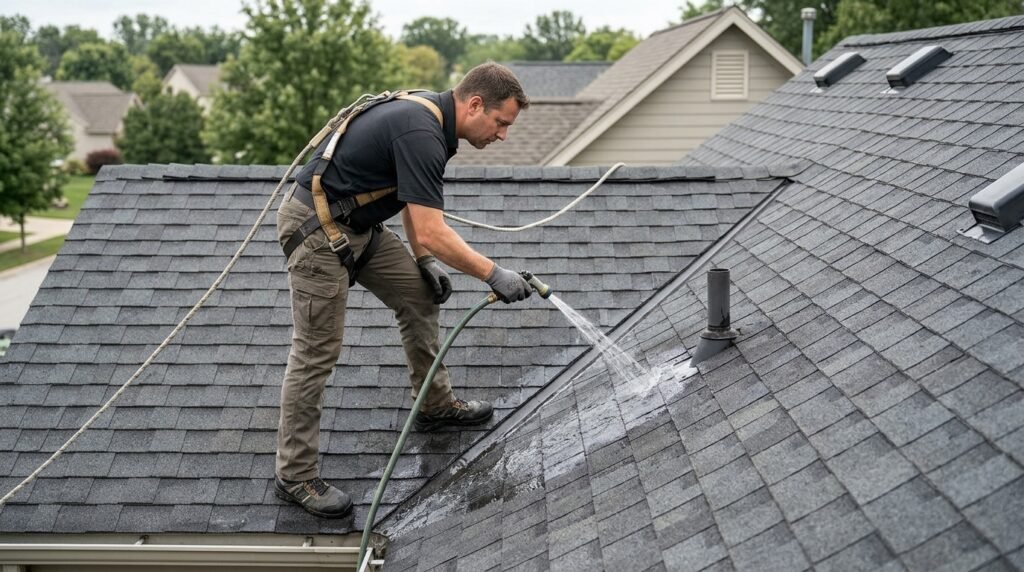
- Flat and concrete roofs. These usually need waterproofing, crack repair or drainage work, and pooling water can make it more involved. A staged water test to find the leak can add to the time.
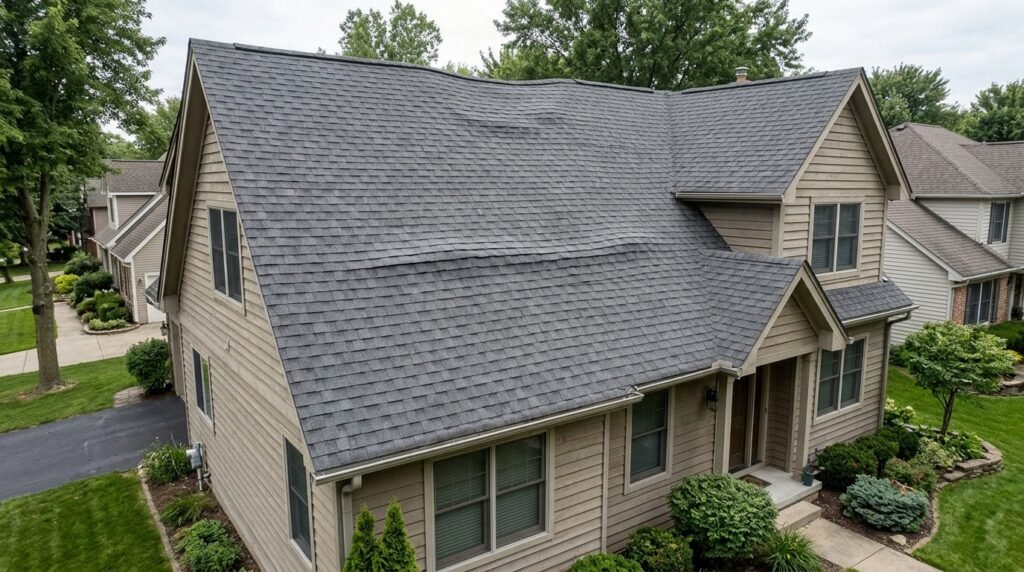
If you’re not sure what’s causing the damage on a shingled roof, it can be worth reading about why roof shingles bow or bulge, because swelling can mean the problem is under the surface.
Hidden costs people miss
This is where a lot of people get caught out. The price on the quote is for the roof. These things sometimes come on top, or arrive as a surprise.
- Rotten wood. You often only find it once the roofing comes off. Ask how the quote handles it, and whether it’s priced per board or included.
- Wet insulation and ceilings. Fixing the roof doesn’t fix the ceiling underneath. Replastering, repainting and replacing insulation are often separate jobs.
- Mould. If water has been getting in for a while, there may be mould to clean.
- Matching materials. Finding tiles or shingles that match an older roof can take time and cost more.
- Scaffolding or access equipment on tall or steep roofs.
- Waste removal. Old materials have to go somewhere.
- A return visit. If the first repair doesn’t find the real cause, you pay twice.
A good roofer will tell you about these before they start, and give you a plain answer on what happens if they find more once they open up the roof.
How to read a roof repair quote
A good quote is easy to understand. If you can’t tell what you’re paying for, ask. Here’s what to look for.
- What the problem is, in plain words, and where it is.
- What work will be done. Not just roof repair, but which parts, how and in what order.
- The materials. What type, what quality and how much.
- The labour, and how long it should take.
- What’s not included. Ceiling repairs, scaffolding, waste removal and any hidden damage they might find.
- How extra costs are handled. If they find rotten wood, what happens and who decides?
- The warranty. What’s covered, for how long and in writing.
- The payment terms. How much upfront, and when the rest is due.
- The timeline. When it starts and how long it takes.
If you’re getting more than one quote, compare like with like. A much cheaper quote might leave out materials, skip the hidden-damage check or not include a warranty. A much dearer one might include things the others don’t. Put them side by side and ask each roofer to explain the differences.
Repair or replace, the money view
Sometimes the repair that’s being quoted isn’t the smartest way to spend your money. A rough rule is to think about replacement when repair bills start adding up to a big chunk of the cost of a new roof, or when the same roof keeps needing fixes. It’s only a guide, and each roof is different.
Things that push toward repair: damage in one area, a fairly young roof and a clear, fixable cause. Things that push toward replacement: widespread wear, several leaks in different places, an old roof near the end of its life and repairs that keep failing.
If you’d like a second pair of eyes before you decide, an inspection will tell you what condition the roof is really in, what needs doing now and what can wait.
Ways to keep the cost down
You can’t make roof repair free, but you can avoid paying more than you need to.
- Fix small problems early. A cracked collar or a few lifted tiles is cheap now. After a season of leaks, it’s a lot more.
- Check your roof regularly, and after storms. Catching damage early is the single best way to save money.
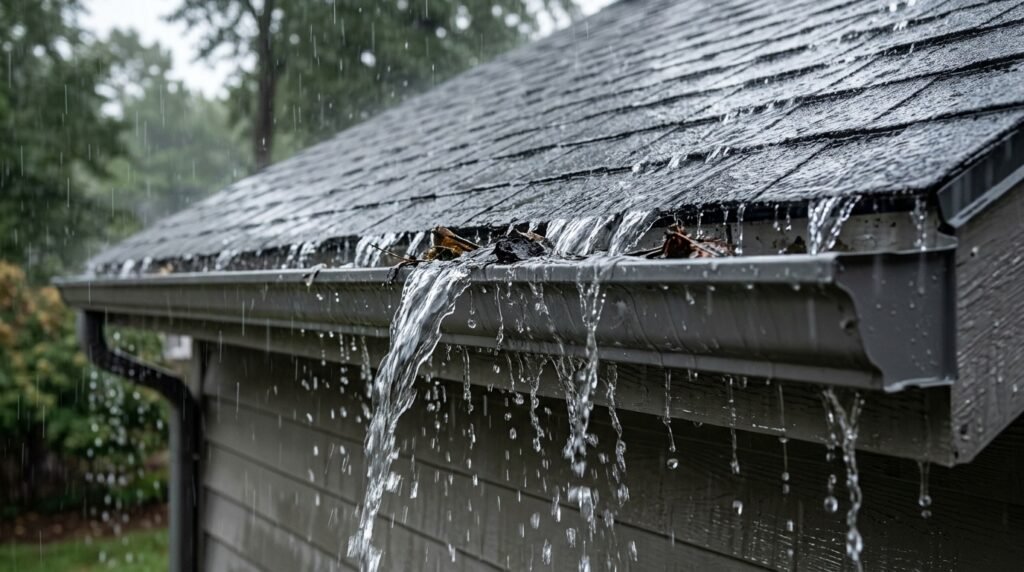
- Keep gutters clear so water doesn’t back up under the roof edge.
- Get the leak traced properly before agreeing to repairs, so you fix the right thing the first time.
- Get a written quote and ask for the details, so there are no surprises.
- Plan before the rainy season, when roofers are busiest and emergency work costs more.
- Ask what’s covered by the warranty before the work starts.
- Don’t pay for work you don’t need. A good roofer will tell you honestly what can wait.
Red flags in a quote
Most roofers are honest, but a few warning signs are worth knowing.
- A price over the phone without seeing the roof. It’s a guess, and it may change once they arrive.
- A price that’s far lower than everyone else’s. It may leave out materials, skip the real cause or cut corners somewhere you can’t see.
- No written quote, or one that’s vague about what will be done.
- A big demand for money upfront, especially in cash, with no paperwork.
- Pressure to decide today. A real problem can usually wait for a day or two while you compare.
- No explanation. A good roofer can show you photos and explain the problem.
- A whole new roof recommended without evidence. Sometimes it’s needed, but they should be able to show you why.
- A quick patch with sealant and nothing else, on something that really needs flashing or new materials.
If you want to read more about good practice, the National Roofing Contractors Association (NRCA) and the Asphalt Roofing Manufacturers Association (ARMA) publish guidance on roofing work and what to expect, and InterNACHI explains common roof problems in plain language.
FAQ
How much does roof repair cost?
It depends on what’s wrong, how big the damage is, the type of roof and how easy it is to reach. A small fix like replacing a pipe collar costs far less than repairing rotten wood and rebuilding part of a roof. The only reliable figure is a written quote after an inspection.
Why do two roofers give such different quotes?
Usually because they’re quoting for different work. One may include hidden-damage checks, better materials or a warranty, and another may leave them out. Ask both to explain exactly what’s included.
Is a roof inspection free?
It varies. Some companies include it in the repair price and others charge for it separately. Ask before you book, so there are no surprises.
Why is my roof repair more expensive than I expected?
The most common reasons are hidden damage like rotten wood, a steep or hard-to-reach roof, better quality materials and extra jobs such as ceiling repairs. A good roofer will explain these before starting.
Does the cost go up in the rainy season?
Often, yes. Roofers are busier, emergency call-outs cost more and wet weather can slow the work down. Booking an inspection and repairs before the rains usually saves money and stress.
Is it cheaper to repair or replace?
Repairing is cheaper in the short term when the damage is limited and the roof is in decent shape. But if the roof is old, leaks in several places or keeps needing fixes, replacement may be better value over time.
Can I reduce the cost by doing part of it myself?
Small, safe jobs like clearing gutters can save money. But roof work is risky, and mistakes can cost more than they save. For anything on the roof itself, it’s usually best to leave it to a professional.
Should I pay a deposit?
A modest deposit for materials is common, but be careful with large upfront payments and anything without paperwork. Get the terms in writing.
Final thoughts
Roof repair costs vary because roofs and problems vary. What matters isn’t finding the lowest number. It’s understanding what’s wrong, what the work involves and what you’re paying for, so the repair lasts and you don’t pay twice.
Get the leak traced properly, ask for a written quote with the details and compare offers like for like. And don’t put it off, because a small repair today almost always costs less than a big one after the next rainy season.
If you’d like a clear, honest quote, book a roof inspection with AurexCity. We’ll find the real cause, show you what we find and explain what it will cost and why. Contact us here.