Proper roof ventilation protects your home by letting hot, damp air out of the roof space and fresh air in. Without it, heat builds up under the roof in summer and moisture gets trapped in winter. That heat and moisture quietly wear out the roofing, rot the wood, spoil the insulation and can even grow mould, all without a single drop of rain getting in from outside. Ventilation is one of those things nobody thinks about until something goes wrong.
Below, we’ll explain how ventilation works, what it protects, how to tell if yours isn’t doing its job and what you can do about it. If you’re seeing stains or drips and you’re not sure whether they’re from rain or from moisture inside, our guide on why a ceiling leaks after heavy rain will help you tell the difference.
Want someone to check your roof ventilation? Contact AurexCity to book an inspection, meet the team on our About Us page, or browse more roofing guides. If you’d like to know what a proper inspection involves, read how professionals find hidden roof leaks.
Table of Contents
- What roof ventilation actually is
- How ventilation protects your home
- How air moves through a roof
- Types of roof vents
- Signs of poor ventilation
- Common ventilation mistakes
- How much ventilation do you need
- Ventilation and insulation work together
- What about flat concrete roofs
- How to check your ventilation
- How to improve it
- FAQ
- Final thoughts
What roof ventilation actually is
If your house has a pitched roof, there’s a space between the ceiling of your top floor and the underside of the roof. That’s the attic, or roof space. Roof ventilation is simply a way of letting air move through that space: fresh air comes in low down, and hot, stale, damp air goes out high up.
It isn’t about making the attic comfortable. It’s about stopping two things from building up: heat and moisture. Both of them damage a roof from the inside, and you won’t see it happening.
A roof that’s ventilated properly stays closer to the outside temperature and stays dry. A roof that isn’t ventilated turns into a closed box that gets very hot in the sun and holds on to every bit of moisture that drifts up from the house below.
How ventilation protects your home
Here’s what good ventilation actually does for you.
It stops moisture building up. Every home makes moisture: cooking, showers, washing, drying clothes and even breathing. Warm air carries that moisture upward, and some of it ends up in the roof space. When it meets a cold surface, it turns into water droplets. That’s condensation, and it can drip onto insulation and ceilings, and soak the wood. Ventilation carries that damp air away before it can settle.
It helps prevent mould and rot. Wood that’s damp for a long time rots. Mould grows on damp surfaces, and it can spread through insulation and timber. A dry, airy roof space gives neither of them a chance.
It cuts down on heat. In a hot climate, an unventilated attic can get much hotter than the air outside. That heat bakes the roofing from underneath, and it radiates down into the rooms below, making your home harder to cool.
It helps your roof last longer. Shingles dry out and crack faster when they’re overheated. Tiles, sealants and rubber collars age faster. The wood framing and underlayment suffer too. Good ventilation is one of the cheapest ways to add years to a roof. Our guide on how long a roof lasts explains what else affects it.
It keeps insulation working. Wet insulation stops insulating. Dry, well-ventilated insulation does its job for much longer.
It can help with your cooling bills. By taking some of the heat out of the roof space, good ventilation can reduce how hard your air conditioning has to work. How much it helps depends on your roof, your insulation and the climate, so it’s not a miracle cure, but it does help.
It helps in snowy areas. In places with snow, a warm attic can melt snow unevenly, and the water can refreeze at the roof edge. Good ventilation and insulation keep the roof surface at a more even temperature.
How air moves through a roof
Good ventilation works because of a simple idea: warm air rises. The system needs two parts, working together.
- Intake vents, low down, usually under the roof edge (called soffit or eaves vents). Cooler, fresh air comes in here.
- Exhaust vents, high up, usually at or near the ridge. Warm, damp air leaves here.
As the sun warms the roof, or as warm air rises from the house, the hot air inside the roof space rises and escapes through the high vents. That pulls fresh air in through the low vents to replace it. So there’s a constant, gentle flow, without any fan or machine.
The important word is balanced. If there’s plenty of exhaust at the top but no way for air to get in at the bottom, the air can’t flow. If the intake is blocked, the whole system stalls. Getting the balance right matters more than just having a lot of vents.
Types of roof vents
There are several kinds, and many roofs use more than one.
| Vent type | Where it goes | How it works | Good to know |
|---|---|---|---|
| Soffit (eaves) vents | Under the roof overhang | Let cool air in at the bottom | The most common intake. Easily blocked by insulation or paint. |
| Ridge vents | Along the top ridge of the roof | Let warm air escape evenly along the ridge | Work best when paired with soffit intake. |
| Gable vents | In the end walls of the roof space | Let air pass through from end to end | Depend on wind and a clear route through the attic. |
| Roof (box or louvre) vents | On the roof surface near the top | Let warm air out | Need enough of them, and enough intake below. |
| Turbine vents | On the roof surface | Spin in the wind and pull air out | Work when there’s wind and a clear intake. |
| Powered attic fans | In the roof or a gable | Use electricity to push air out | Need good intake, or they can pull air from the house below. |
| Tile or ridge-tile vents | Built into tile roofs | Let air pass through gaps in tiles | Useful on tile roofs where a ridge vent isn’t possible. |
The best choice depends on your roof type and how it’s built. A roofer can tell you what suits yours.
Signs of poor ventilation
Bad ventilation rarely announces itself. It shows up as a lot of small clues. Here’s what to look for.
In the attic:
- a stuffy, hot or humid feeling, even in cooler weather
- damp or compressed insulation
- water droplets or frost on the underside of the roof or on nail tips
- dark stains, mould or a musty smell
- wood that feels soft or looks discoloured
- rusty nails and metal fittings
Inside the house:
- ceiling stains or damp patches that appear without heavy rain
- peeling paint or bubbling plaster near the ceiling
- upstairs rooms that are much hotter than the rest of the house
- air conditioning that has to work very hard
On the roof:
- shingles that curl, crack or lose granules early, or sealant and collars that dry out fast
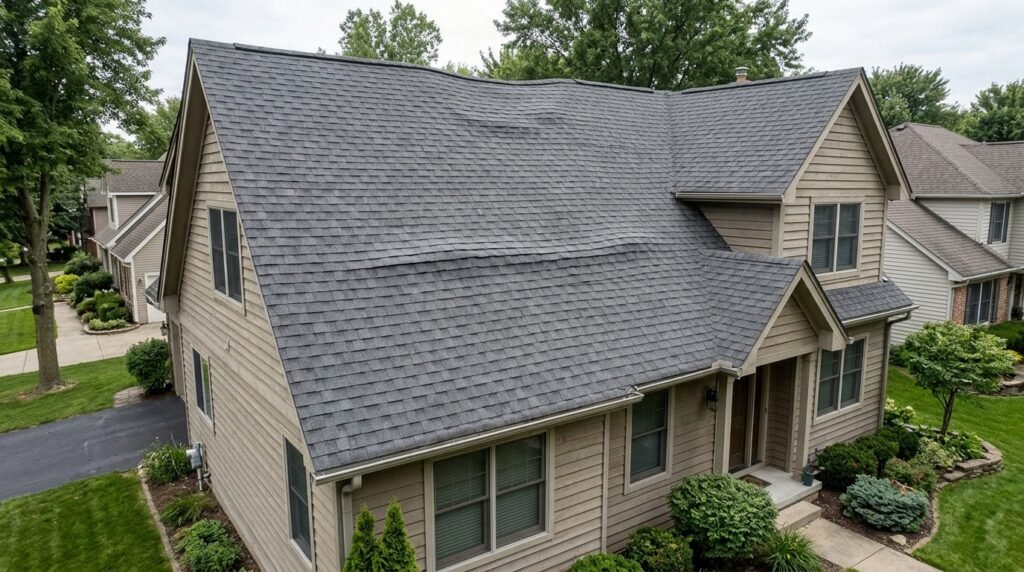
- blistering or buckling on the roof surface. If you can see the surface swelling, our guide on why roof shingles bow or bulge explains how trapped moisture can be involved.
- moss or algae growing on the roof in patches, from constant damp
- in snowy areas, ice building up at the roof edge
A single sign doesn’t prove the ventilation is bad. But several together are a strong hint that the roof space isn’t breathing properly.
Common ventilation mistakes
Most problems aren’t about too few vents. They’re about vents that don’t work together. These are the mistakes we see most often.
- Blocked intake vents. Insulation stuffed into the eaves, or paint over the vent openings, stops air from coming in.
- Not enough vents. A big roof with a couple of small vents can’t move enough air.
- Intake and exhaust out of balance. Lots of exhaust but little intake, or the other way round.
- Mixing different exhaust vents. A ridge vent plus a turbine, plus gable vents, can short-circuit the flow, so air only moves through part of the roof.
- Venting bathrooms and kitchens into the attic. Extractor fans should vent outside, not into the roof space. Otherwise you’re pumping damp air right where you don’t want it.
- Powered fans with no intake. A fan can pull air up from the house, including cooled air, and make moisture problems worse.
- Covering vents during repairs. New roofing, sealant or insulation sometimes buries vent openings by mistake.
- Vents blocked by nests, leaves or dust. Birds and insects love an open vent.
- Assuming more is better. Too much of the wrong kind can cause as many problems as too little.
How much ventilation do you need
There isn’t a single number that fits every roof. It depends on the size of the roof space, the type of roof, the climate and how the house is built. A common rule of thumb in building guidance in some countries is about one square foot of vent opening for every 150 square feet of attic floor, or one for every 300 where the ventilation is well balanced and the ceiling below is properly sealed. That’s only a guide, and local practice and conditions vary.
What matters more than the exact figure is that there’s a clear, balanced path for air, with half the ventilation low down and half high up, and that nothing blocks it. If you’re not sure, a roofer or building professional can look at your roof and tell you whether what you have is enough.
Ventilation and insulation work together
These two are partners, and each one needs the other.
Insulation keeps heat from moving between the house and the roof space. In summer, it keeps heat out of the rooms. In winter, it keeps warm, damp air from rising into a cold attic.
Ventilation carries away whatever heat and moisture still get through.
If you add insulation, it’s important not to block the vents when you do it. Insulation pushed into the eaves cuts off the intake, and then the roof can’t breathe. A good installer leaves a clear gap, so air can still flow over the top of the insulation.
And if the ceiling below isn’t sealed well, with gaps around lights, hatches and pipes, warm, moist air leaks up into the roof space. Sealing those gaps helps as much as adding vents.
What about flat concrete roofs
A lot of homes have flat concrete roofs with no attic, and the picture is a bit different.
There’s no roof space to ventilate, so the focus shifts. The concrete soaks up heat during the day and passes it down into the rooms. Moisture problems tend to come from poor waterproofing, cracks and pooling water, not from condensation in an attic.
Some things help: good insulation, reflective or heat-resistant coatings on the surface, keeping the surface and drains clear, and making sure any false ceiling or void below has airflow. If your flat roof has a false ceiling or a void, ask a professional how it should be ventilated, because it depends on how it was built.
How to check your ventilation
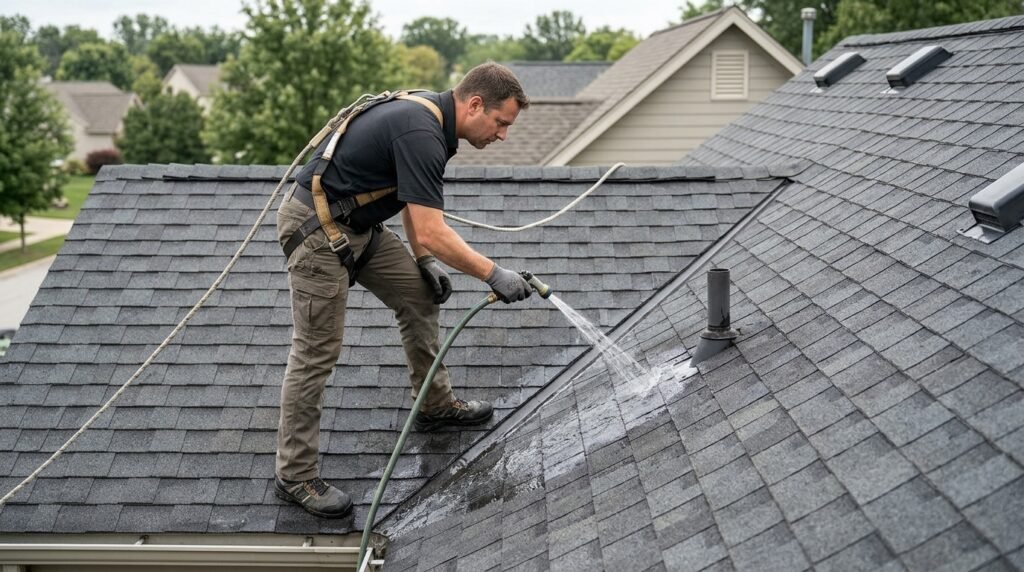
You can do a basic check yourself, safely, on a dry day.
From the ground:
- Look for vents on the roof, at the ridge and under the eaves. Are they there, and do they look clear?
- Look for nests, debris or paint blocking the openings.
- Notice whether the roof surface has curling, blistering, moss or staining that could point to trapped moisture.
From inside the attic, if you can get in safely:
- Use a torch. Look at the eaves. Can you see daylight or feel air coming through? Or is insulation packed against the vents?
- Look at the underside of the roof for dark stains, mould, water droplets or damp wood.
- Check whether the insulation is dry and fluffy, or damp and flattened.
- Notice the air. Is it stuffy, hot, damp or musty?
- Check where the bathroom and kitchen fans vent to. They should go outside.
A simple test: on a hot day, compare the temperature in the attic with the temperature outside. If the attic is far hotter, the heat isn’t escaping. In winter, look for condensation or frost.
Please don’t walk on the ceiling joists carelessly, because you can fall through the ceiling, and don’t climb onto a steep or wet roof. If you’re unsure about anything, a professional inspection is the safer way.
How to improve it
The right fix depends on what’s wrong. Here are the usual options, from simple to bigger.
- Clear blocked vents. Remove nests, leaves, dust and paint, and pull insulation back from the eaves.
- Add baffles or channels at the eaves, so insulation can’t block the airflow.
- Add vents where there aren’t enough, keeping the intake and exhaust balanced.
- Fix the balance. If there’s lots of exhaust and not enough intake, add intake.
- Move bathroom and kitchen fans so they vent outside, not into the roof space.
- Seal gaps in the ceiling around lights, hatches and pipes, to stop warm, moist air leaking up.
- Upgrade the insulation, keeping the vents clear.
- Consider ridge or tile vents on a roof that doesn’t have good exhaust.
- Be careful with powered fans. If you use one, make sure there’s plenty of intake, and ask a professional first.
- Repair any damage that poor ventilation has already caused, like wet insulation, mouldy or rotten wood and stained ceilings.
This is the kind of job where it pays to ask someone who works on roofs every day. Adding the wrong vents in the wrong places can make things worse, not better. If you want to read more about good practice, the National Roofing Contractors Association (NRCA) and the Asphalt Roofing Manufacturers Association (ARMA) publish guidance on attic ventilation, and InterNACHI explains common ventilation and moisture problems in plain language.
FAQ
How does proper roof ventilation protect my home?
It lets hot, damp air out of the roof space and fresh air in. That stops moisture building up, which prevents condensation, mould and rot, and it cuts heat build-up, which helps your roofing, insulation and wood last longer and can ease the load on your air conditioning.
Will roof vents prevent condensation?
Good ventilation helps a lot, because it carries damp air away before it condenses. But vents alone aren’t always enough. You also need to stop moist air leaking up from the house, with sealed ceilings, extractor fans venting outside and good insulation.
What are the signs of poor roof ventilation?
A hot, stuffy or damp attic, damp or flattened insulation, mould or musty smells, water droplets on the underside of the roof, stained ceilings, very hot upstairs rooms, shingles that age early and moss patches.
Do I need roof ventilation if I have a flat concrete roof?
There’s usually no attic to ventilate, so the focus is on insulation, heat-reflective coatings, waterproofing and drainage. If there’s a false ceiling or void under the roof, ask a professional how it should be ventilated.
Can a roof have too much ventilation?
Yes, in the sense of unbalanced or badly arranged ventilation. Too much exhaust without enough intake, or several different vent types fighting each other, can stop air flowing properly. More vents aren’t automatically better.
Are powered attic fans a good idea?
They can help in some cases, but they need plenty of intake. Without it, they can pull air up from the house below, including cooled air, and make moisture problems worse. Ask a professional before installing one.
Should bathroom fans vent into the attic?
No. They should vent outside. Venting damp air into the roof space is one of the most common causes of condensation and mould.
How do I know if my attic ventilation is blocked?
Check the eaves from inside. If insulation is packed against the vent openings, or you can’t see or feel any airflow, they may be blocked. Outside, look for nests, debris or paint over the vents.
Who should I call about roof ventilation?
A roofer with real experience of ventilation, who can look at your roof, explain what’s wrong and suggest a fix that suits your roof type. A roof inspection is a good place to start.
Final thoughts
Roof ventilation isn’t glamorous, and you’ll never see it working. But it’s one of the quiet reasons some roofs last decades while others fall apart early. It keeps heat and moisture from building up, protects the wood, insulation and roofing, and helps your home stay more comfortable.
If your attic is hot and stuffy, damp or musty, if you’ve got stains that don’t match the rain, or if your roof is ageing faster than it should, the ventilation is worth a look. Clear the blocked vents, keep the intake and exhaust balanced, and don’t vent damp air into the roof space.
If you’d like your roof ventilation checked, book a roof inspection with AurexCity. We’ll look at the roof and the roof space, show you what we find and explain what would help. Contact us here.