Most roofs last somewhere between about 15 and 50 years, and a few last much longer, depending on the material, the weather and how well the roof is looked after. A cheap roof in harsh sun with no maintenance can be worn out in 15 years. A good tile or metal roof, fitted properly and checked regularly, can outlive the person who paid for it. The roof covering gets all the attention, but small parts like flashing, sealant and pipe collars often wear out long before it does.
Below, we’ll go through how long each type of roof usually lasts, what makes it last longer or wear out faster, and the signs that yours is getting old. That way you can plan and budget, instead of finding out in the middle of the rainy season. If your roof is already leaking, our guide on why a ceiling leaks after heavy rain is a good place to start.
Want to know how much life your roof has left? Contact AurexCity to book an inspection, meet the team on our About Us page, or browse more roofing guides. If you’d like to see what an inspection involves, read how professionals find hidden roof leaks.
Table of Contents
- How long different roofs usually last
- What affects how long a roof lasts
- Why installation matters more than people think
- How hot sun and monsoon rain wear a roof down
- Signs your roof is getting old
- How to make a roof last longer
- Repair, restore or replace as it ages
- Checking the age of a roof when buying a home
- FAQ
- Final thoughts
How long different roofs usually last
Here are the commonly quoted lifespans for the most common roof types. Treat them as rough guides, not promises. A roof’s real life depends on everything in the next section.
| Roof type | Roughly how long it lasts | Worth knowing |
|---|---|---|
| Asphalt shingles | 15 to 30 years | Cheaper, thinner shingles sit at the lower end. Strong sun and heat shorten the life. |
| Clay tiles | 50 years or more | The tiles themselves last a very long time, but the layers under them and the flashing wear out sooner. |
| Concrete tiles | 40 to 50 years or more | Durable, but heavy, and they can crack from knocks or movement. |
| Metal roofs | 40 to 70 years | Depends on the metal, the coating and how the panels are fixed. |
| Flat concrete roof with waterproofing | The slab lasts for decades | The waterproofing layer on top often needs renewing every 10 to 20 years, depending on the system and the workmanship. |
| Flashing, sealant and pipe collars | Often 10 to 20 years, sometimes less | These small parts are the usual first to fail, whatever the roof type. |
One thing to notice: the roof covering and the parts around it age at different speeds. A tile roof can be fine for 50 years while its flashing has been replaced twice. That’s normal, and it’s one more reason regular checks matter.
What affects how long a roof lasts
Two houses on the same street can have the same roof, put on the same year, and end up with very different lifespans. These are the things that make the difference.
- The quality of the material. Thicker, better made tiles, shingles and metal last longer than thin, cheap ones. The price difference at the start is usually small compared with the cost of replacing a roof early.
- How well it was installed. This is the big one, and we’ll look at it in the next section.
- The climate. Strong sun, big temperature swings, heavy rain, wind and dust all wear a roof down.
- Ventilation. A hot, damp attic cooks a roof from underneath. Good airflow helps materials last longer.
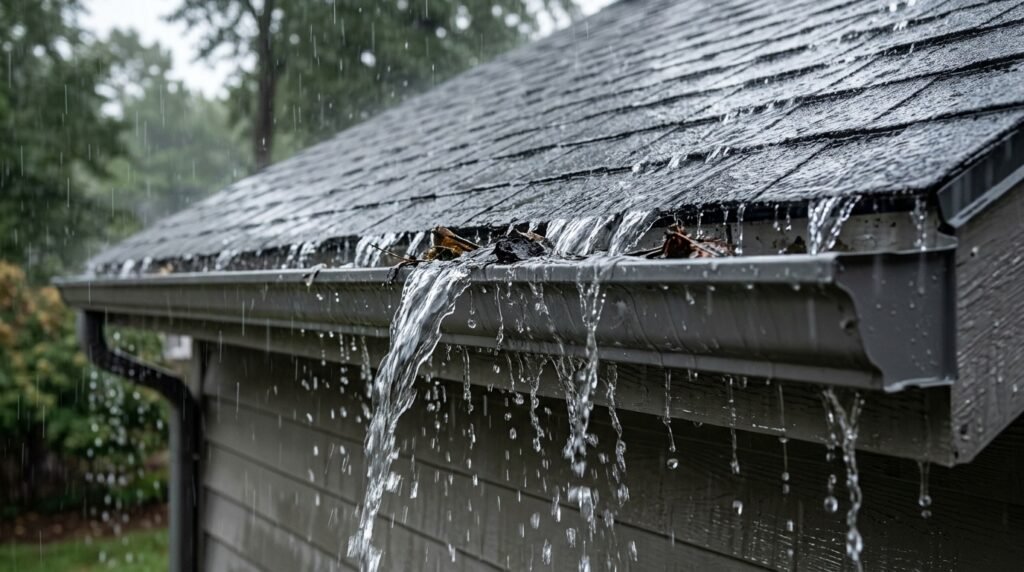
- The slope and drainage. Water that runs off quickly does less harm than water that sits. Flat roofs with poor drainage and gutters that overflow shorten a roof’s life.
- The flashing and the small parts. If flashing, sealant and pipe collars fail early, water gets in and damages the wood and the roofing around them.
- Maintenance. A roof that’s checked, cleaned and repaired early lasts far longer than one that’s ignored until it leaks.
- Trees and debris. Branches scrape the surface, and leaves collecting in valleys and gutters hold moisture against the roof.
- People walking on it. Every trip onto the roof for a satellite dish, a water tank or a solar panel can crack tiles or bend flashing.
- The repairs it has had. Good repairs extend a roof’s life. Quick patches with a lot of sealant and no real fix often hide a problem that carries on quietly.
Why installation matters more than people think
A lot of roofs that wear out early weren’t doing anything wrong. They were fitted badly.
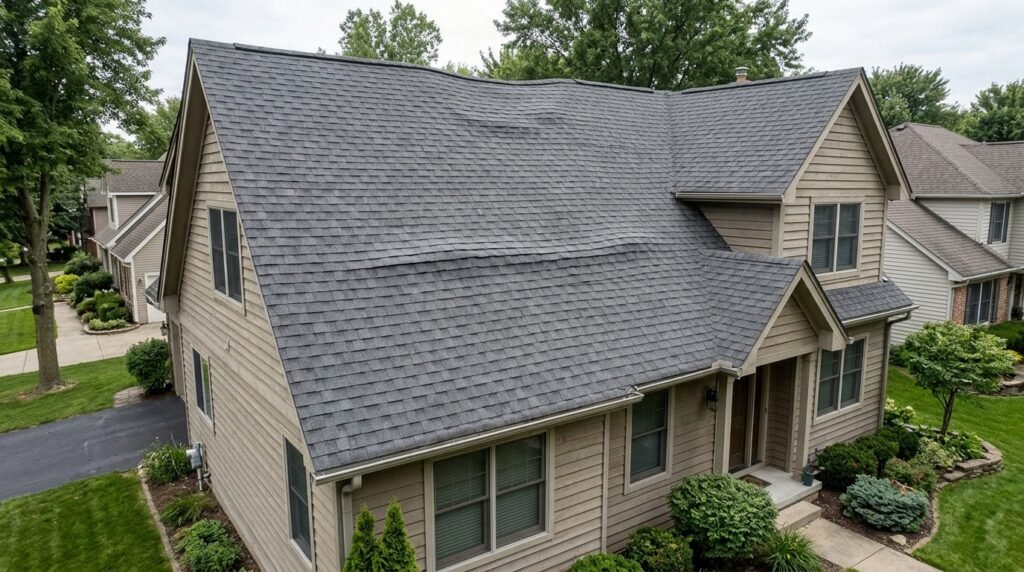
Poor installation can mean flashing that’s overlapped the wrong way, nails in the wrong places, wood that was damp when the roof went on, underlayment that wrinkled, shingles laid unevenly or too few fixings. None of it shows on day one. It shows after a few seasons, when the roof starts leaking, curling or lifting for no obvious reason.
It works the other way too. A well-fitted roof, with the right overlaps, solid fixings, dry wood and decent ventilation, can easily reach the top of its expected life. That’s why who fits your roof matters as much as what goes on it. If you’re curious about what goes wrong with a new roof, our guide on why roof shingles bow or bulge explains how problems under the surface can show up on top.
How hot sun and monsoon rain wear a roof down
In a country with fierce summers and heavy monsoon rain, a roof gets two kinds of punishment.
The sun. Roof materials can get very hot in the afternoon and cool quickly at night or when rain hits. That repeated stretching and shrinking cracks sealant, tires metal, dries out rubber collars, dries the oils out of asphalt shingles and breaks down waterproofing layers on flat roofs. UV light does its own damage on top of that.
The monsoon. Heavy rain finds every weak spot. A small crack or a lifted flashing edge that stayed dry all year suddenly starts to leak. Blocked gutters overflow, flat roofs pool water, and wind-driven rain gets under loose edges.
Dust and debris. Dust, leaves and bird droppings collect in valleys and drains, hold moisture against the roof and speed up wear.
None of this means roofs can’t last in a hot, rainy climate. It means the roof needs a bit more attention, especially before and after the rainy season.
Signs your roof is getting old
You don’t have to wait for a leak. Roofs usually give warnings first.
- Shingles that are curling, cracking, buckling or losing granules. If you’re finding a lot of granules in the gutters, the surface is wearing out.
- Cracked, slipped or missing tiles, or tiles that have turned crumbly or very porous.
- Rust on metal roofing or flashing, and sealant that’s dry, cracked or missing.
- Cracked rubber collars around vent pipes.
- Sagging or dipping in the roofline, which can point to damp or rotten wood.
- Ceiling stains or damp patches that appear after rain.
- A musty smell or damp insulation in the attic.
- Daylight showing through the roof boards from inside the attic.
- Moss, algae or standing water that doesn’t clear.
- A flat roof that’s cracking, bubbling or pooling water, or a waterproofing layer that’s peeling.
- Repairs that keep coming back in different places. That’s often the roof telling you it’s tired overall.
- Higher cooling bills, which can mean the roof and insulation aren’t protecting the house as well as they used to.
One or two of these doesn’t mean the roof is finished. Several of them together, on a roof that’s already old, usually does mean you should start planning.
How to make a roof last longer
The good news is that most of what extends a roof’s life is simple and cheap compared with replacing it.
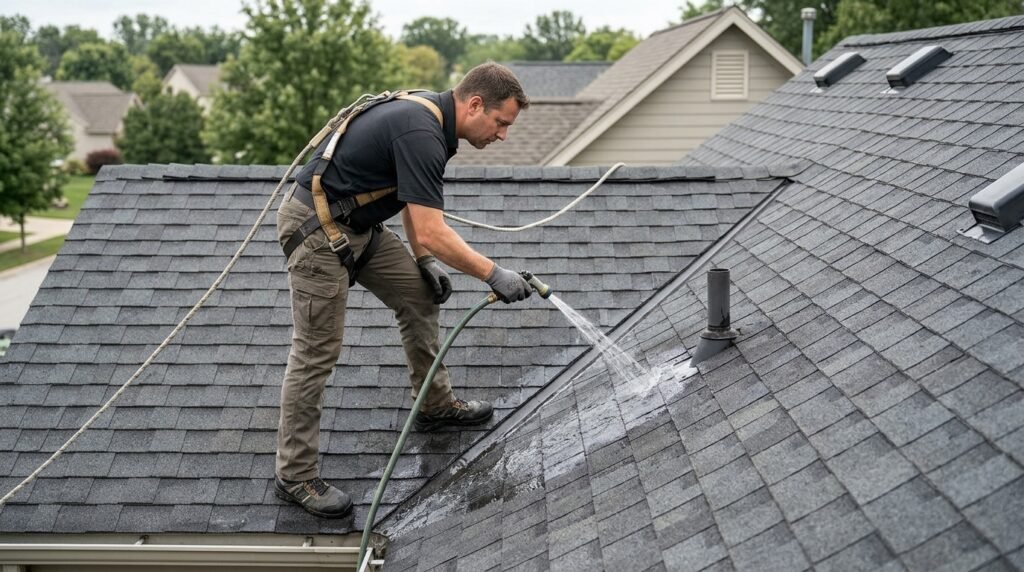
- Get it inspected regularly, and after major storms. Catching a small problem early is the single best way to add years to a roof.
- Fix small problems quickly. A cracked pipe collar or a few lifted tiles costs little now and a lot after a season of leaks.
- Keep gutters and drains clear so water runs off.
- Clear valleys, roof edges and flat roof drains of leaves and debris.
- Trim branches that hang over the roof.
- Look after the flashing. It’s the part most likely to fail first, and the part that causes the most hidden damage when it does.
- Keep the attic ventilated and watch for damp.
- Limit foot traffic, and ask anyone working on the roof to be careful.
- Renew waterproofing on flat roofs before it fails completely, not after the leaks start.
- Choose good materials and a good installer if you’re building or replacing a roof.
If you want to read more about good practice, the National Roofing Contractors Association (NRCA) and the Asphalt Roofing Manufacturers Association (ARMA) publish guidance on roof care and maintenance, and InterNACHI explains common roof problems in plain language.
Repair, restore or replace as it ages
As a roof gets older, you’ll usually face a choice between three paths.
Repair makes sense when the damage is limited and the rest of the roof is sound, like a few cracked tiles, a failed flashing detail or a worn pipe collar.
Restore is a good middle option for roofs like tile roofs, where the tiles themselves are still good but the surface, pointing, underlayment or coatings are tired. A proper restoration can add many years of life for less than a full replacement.
Replace makes sense when the roof is widely worn out, leaks in several places, has damaged wood underneath or keeps needing repairs that don’t last.
A useful way to decide is to ask three questions. Is the damage limited, or all over? Is the roof near the end of its expected life? Do repairs keep failing? If the answers are limited, no and no, repair. If they’re all over, yes and yes, plan for replacement. An inspection will tell you where your roof actually sits.
Checking the age of a roof when buying a home
If you’re buying a house, the age of the roof is one of the most useful things you can find out, because it tells you when a large bill might arrive.
- Ask the seller when the roof was last replaced or restored, and who did it.
- Ask for paperwork, like receipts, warranties or photos from the work.
- Look at the condition, not only the age. A well-kept 20-year-old roof can be in better shape than a neglected 10-year-old one.
- Check the attic for stains, damp or daylight.
- Get a proper inspection before you commit, and build any likely repair costs into your offer.
If you’re not sure how old a roof is, an inspector can usually give you a reasonable estimate from its condition.
FAQ
How long does a roof last?
It depends on the material, the climate, the quality of the installation and how well it’s maintained. As a rough guide, asphalt shingles last 15 to 30 years, tile roofs 40 to 50 years or more, and metal roofs 40 to 70 years. On flat concrete roofs, the waterproofing layer often needs renewing every 10 to 20 years.
What makes a roof wear out faster?
Cheap materials, poor installation, strong sun and heat, heavy rain, poor ventilation, blocked gutters, neglected flashing, falling branches and a lack of maintenance all shorten a roof’s life.
How do I know if my roof is near the end of its life?
Look for curling or cracking roofing, lots of granules in the gutters, cracked or crumbling tiles, rust, dry sealant, sagging, ceiling stains and repairs that keep coming back in different places. A professional inspection will give you a clear answer.
Does regular maintenance really make a difference?
Yes, a big one. Checking the roof, cleaning the gutters and fixing small problems early can add years to its life, and it’s usually much cheaper than replacing the roof sooner than you need to.
Do tile roofs last longer than other roofs?
The tiles themselves often do. But the layers under them, the flashing and the sealant wear out sooner, so a long-lived tile roof still needs regular checks and some repairs along the way.
Should I replace my roof just because it’s old?
Not necessarily. Age is only part of the picture. A well-kept older roof can still be in good shape, while a neglected younger one may not be. Condition matters more than the number of years.
How often should I get my roof inspected?
Once a year is a sensible habit, plus after major storms and before the rainy season. If the roof is old, checking more often is worthwhile.
Can a roof last longer than its expected lifespan?
Yes, with good materials, careful installation and regular maintenance. But it isn’t something to rely on, so keep an eye on the condition and plan ahead.
Final thoughts
There’s no single answer to how long a roof lasts, because it’s a mix of material, installation, climate and care. But there are clear signs that tell you where yours is in its life, and plenty you can do to stretch it out.
The cheapest roof repair is the one you do before the leak. Get the roof checked, fix small problems early, look after the flashing and drainage, and plan ahead as it ages, so a replacement is something you choose, not something that’s forced on you in the middle of a storm.
If you’d like to know how much life your roof has left, book a roof inspection with AurexCity. We’ll check the roof, show you what we find and explain your options plainly. Contact us here.